
First Place!

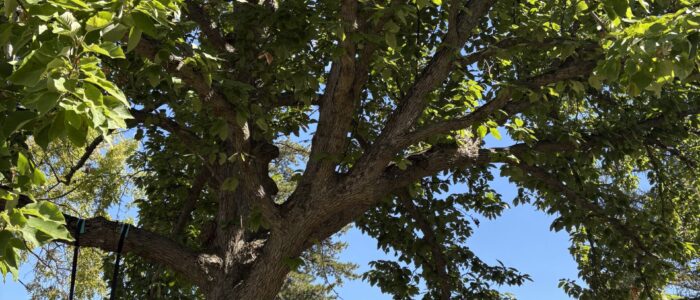
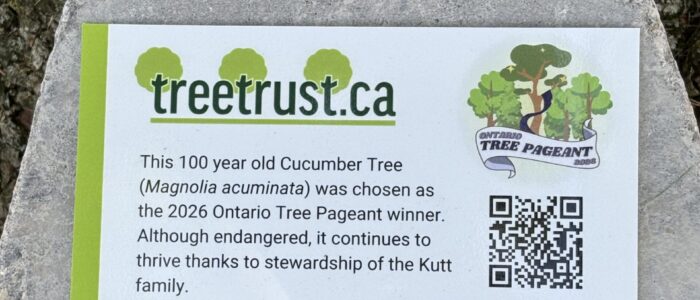
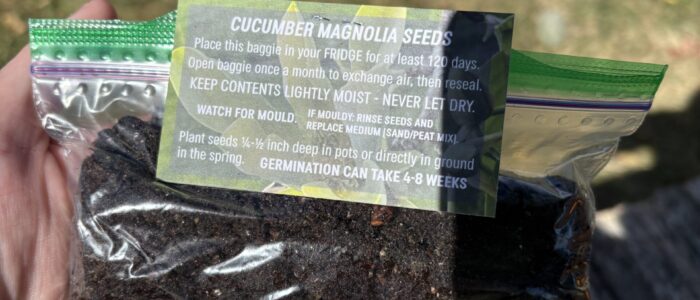
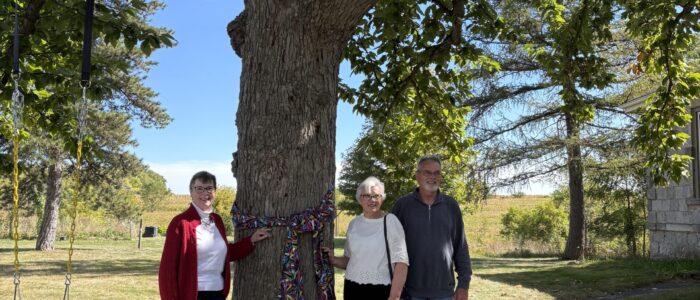
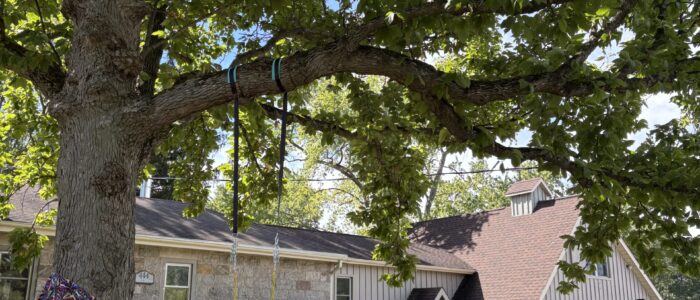
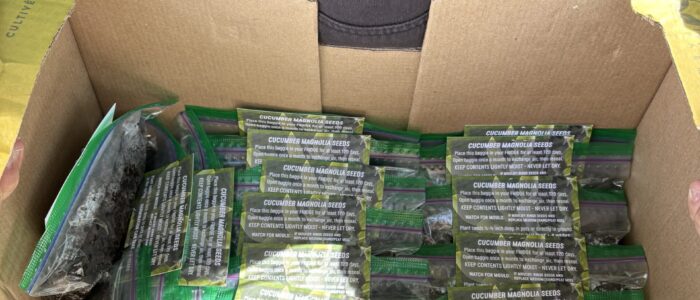
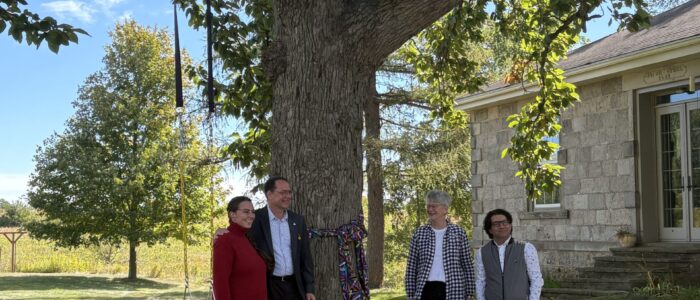
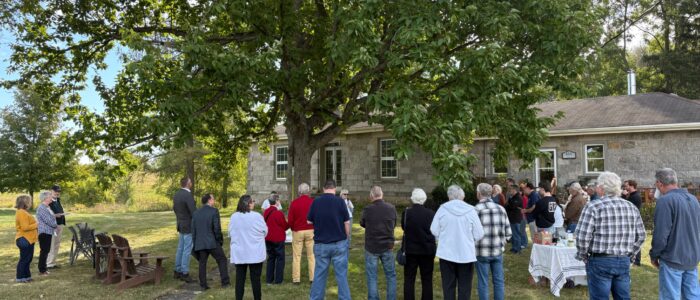
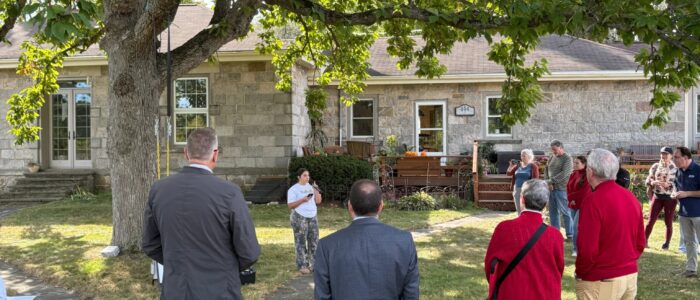
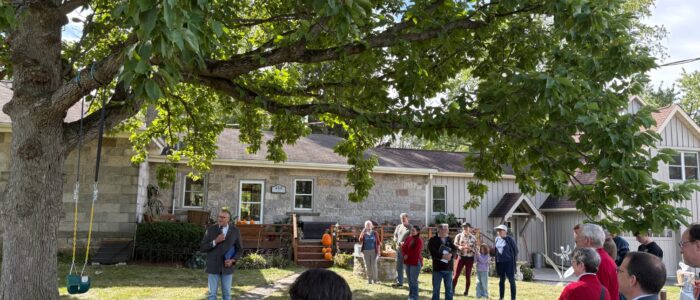
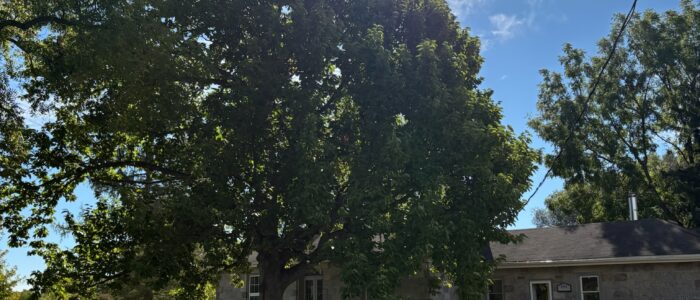
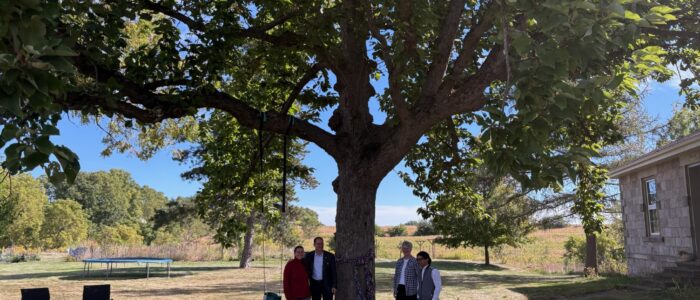
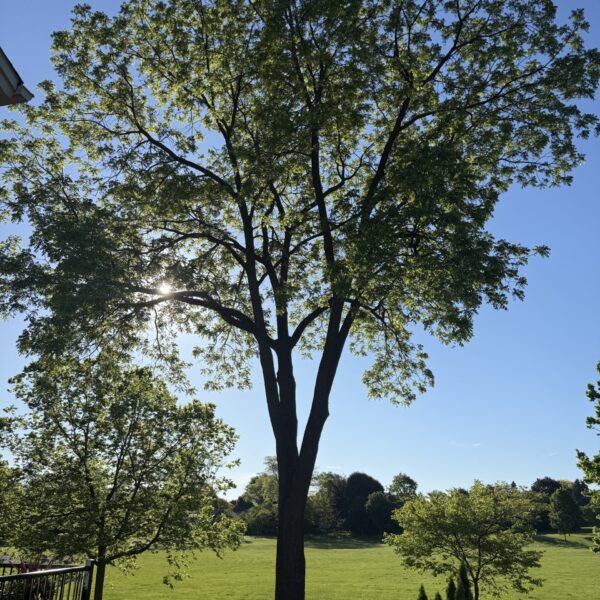
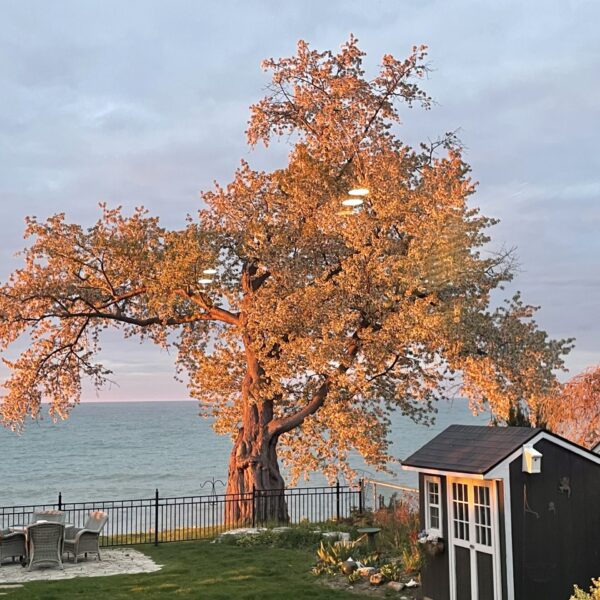
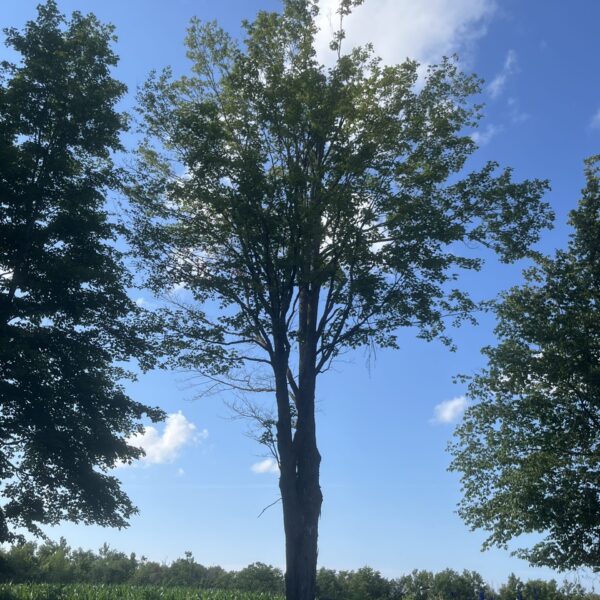
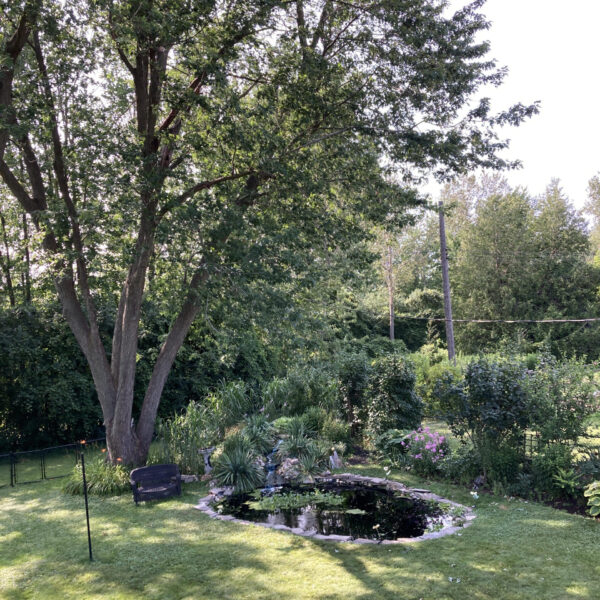
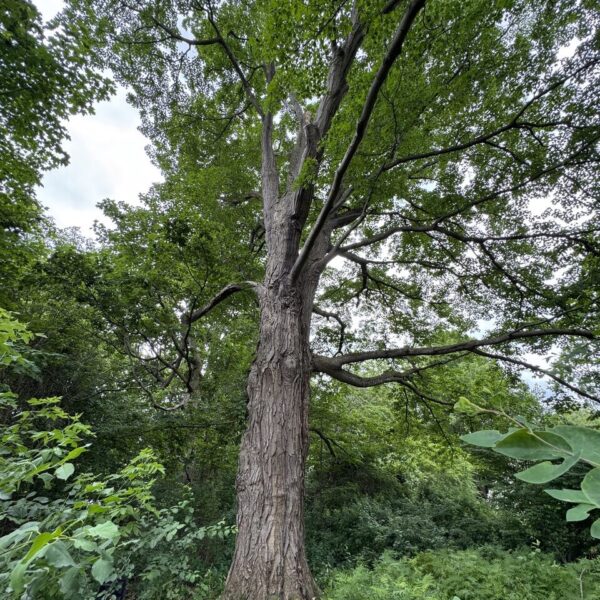
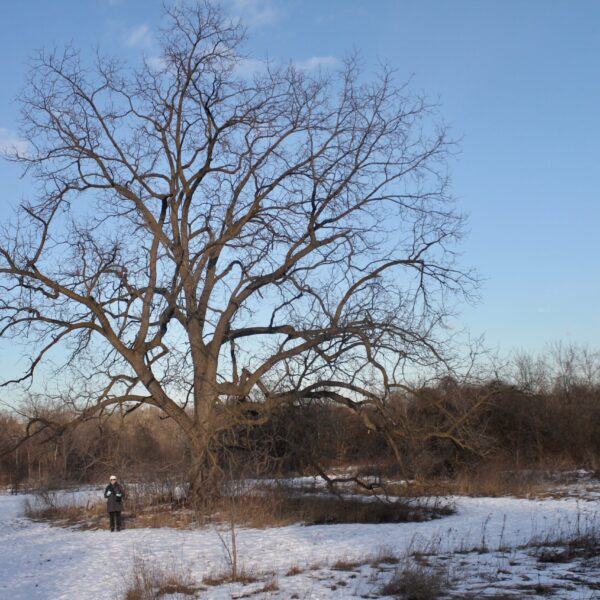
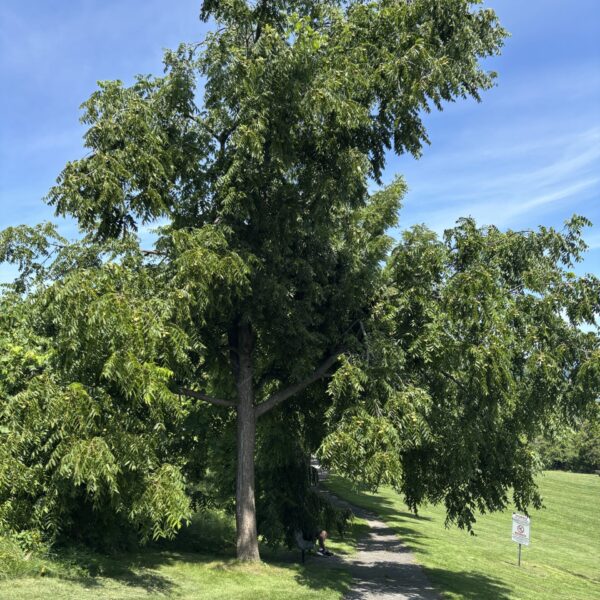
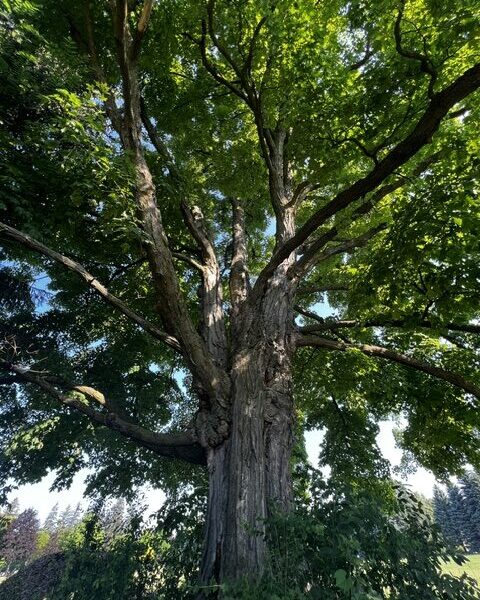
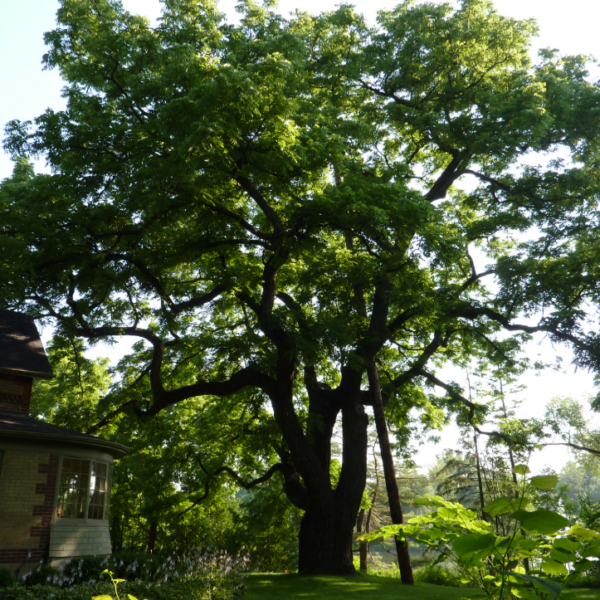
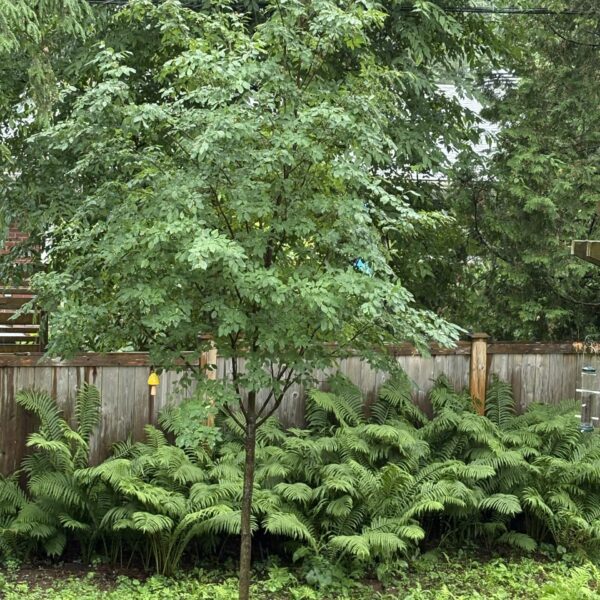
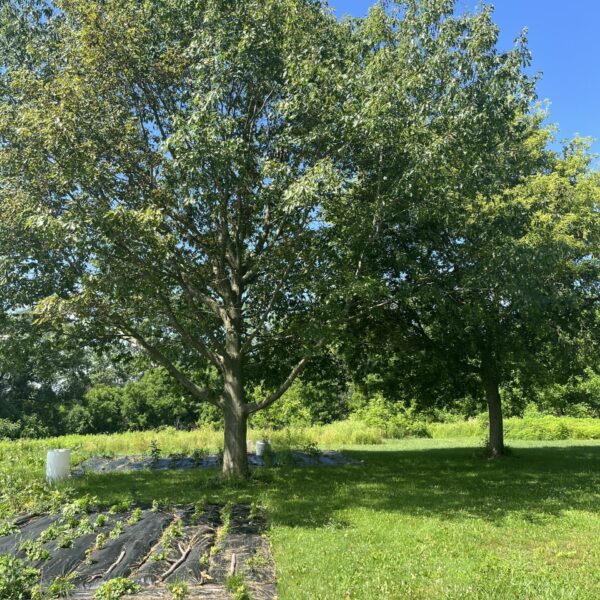
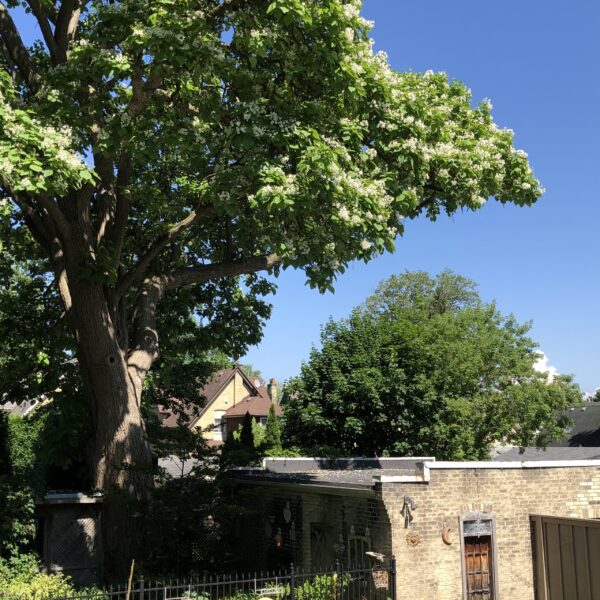
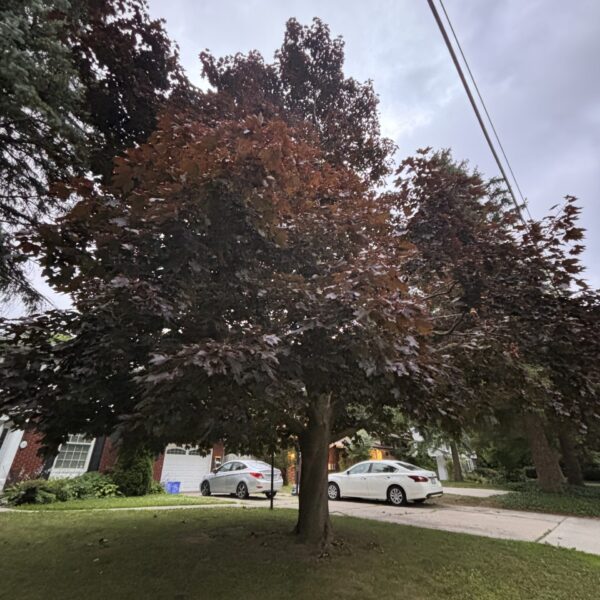
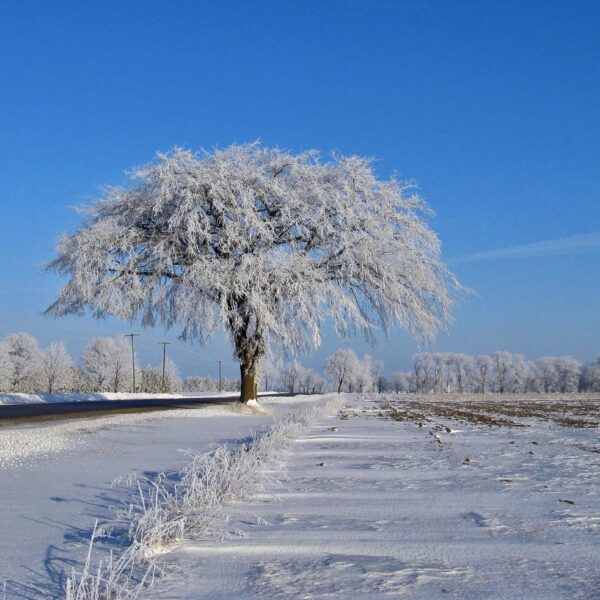
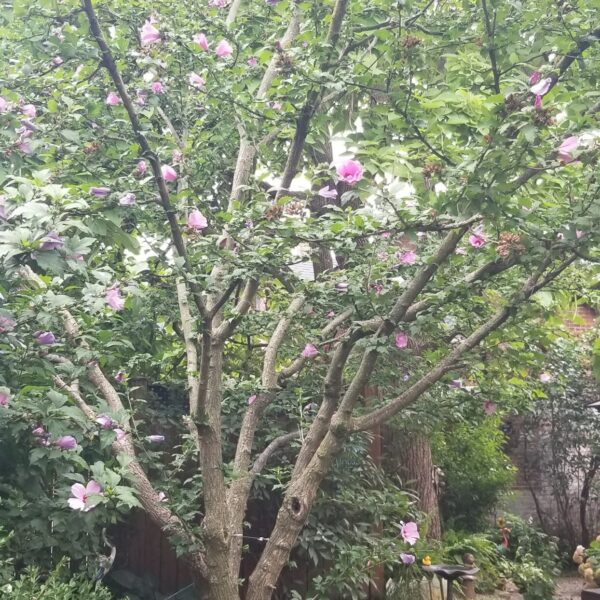
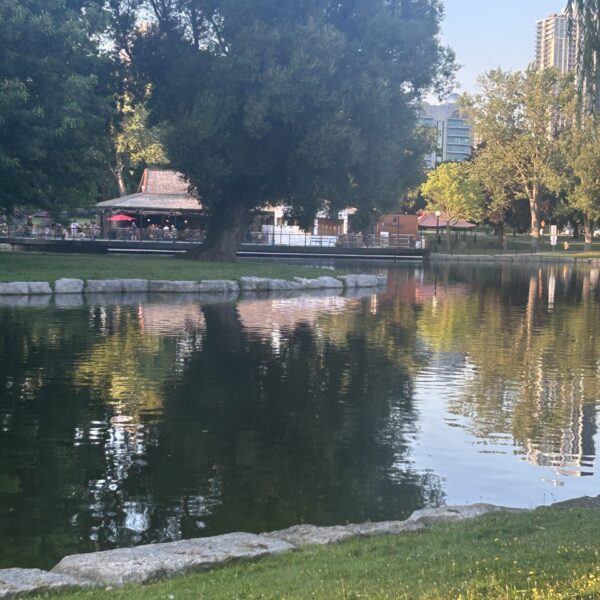
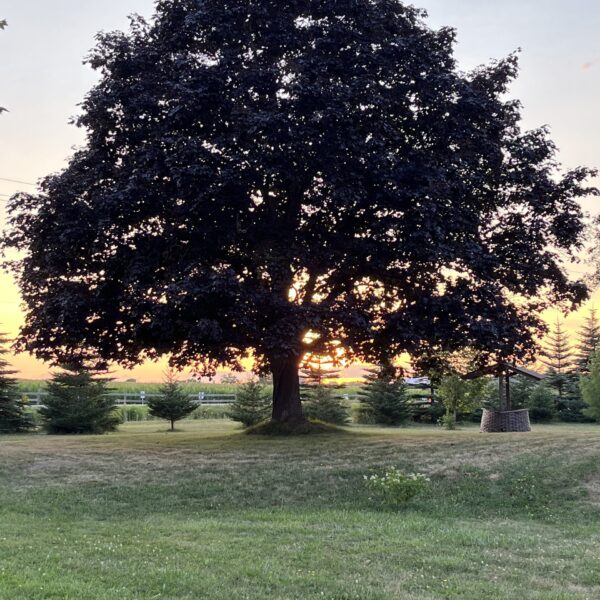
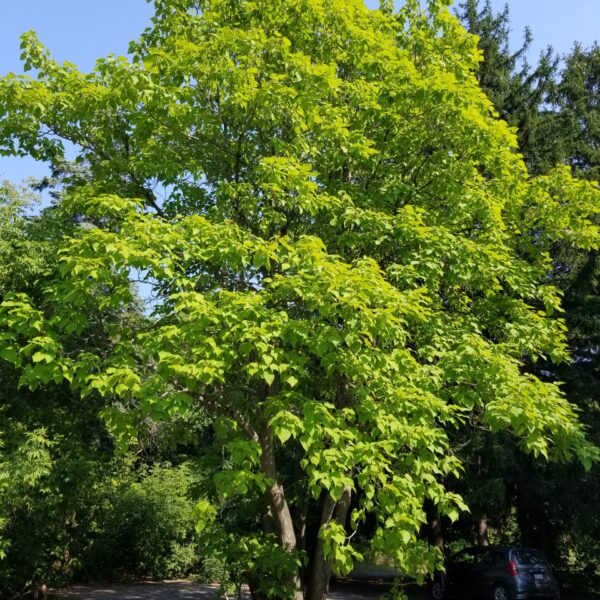
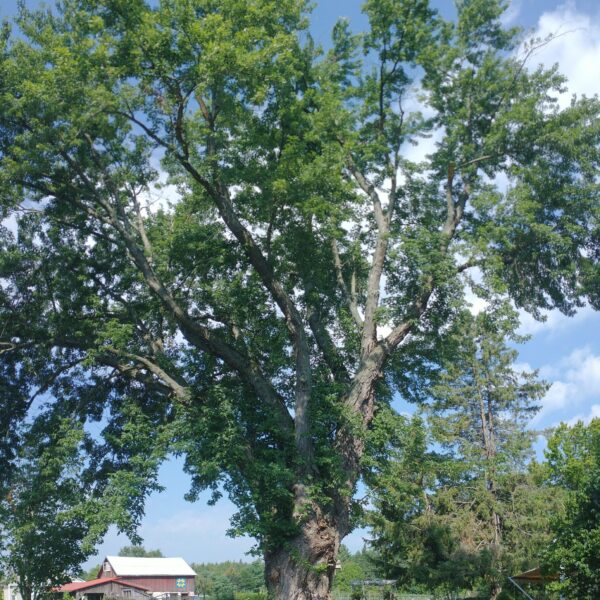
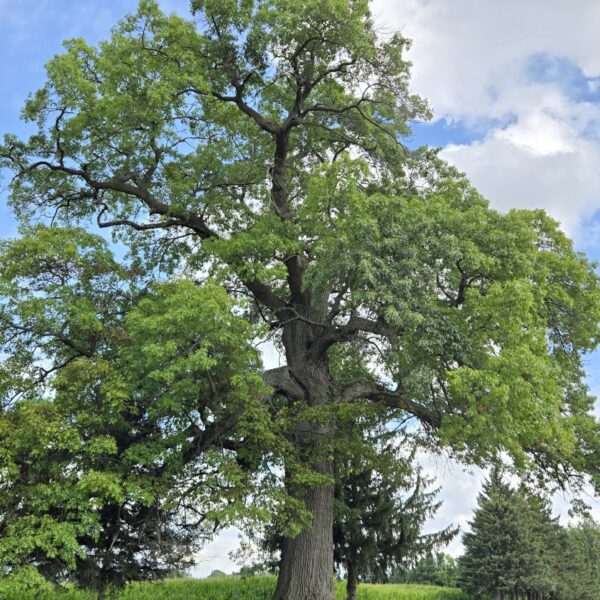
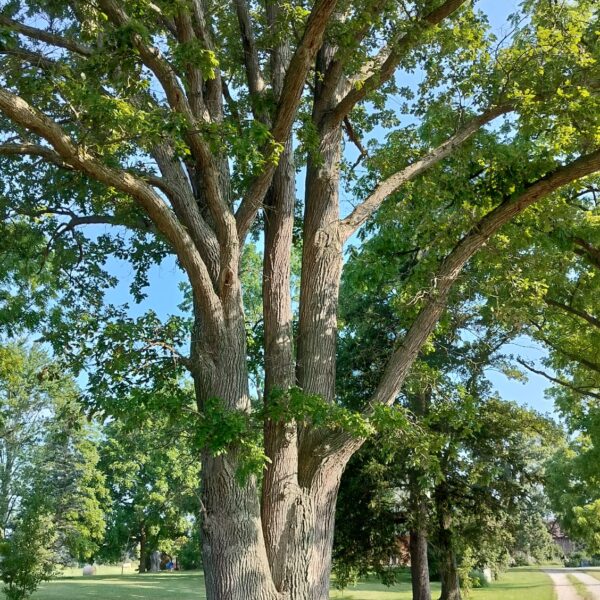
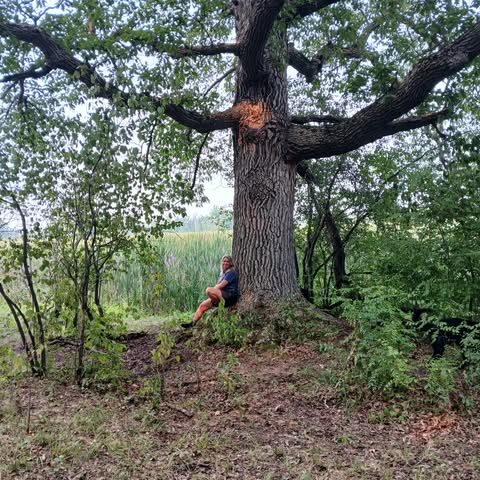
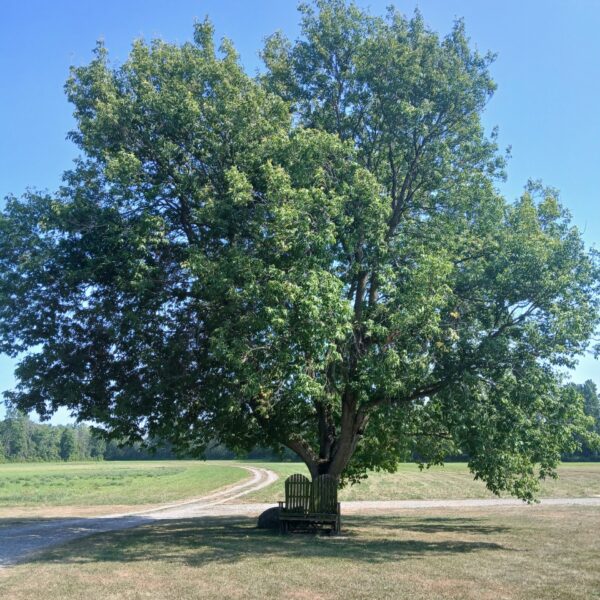
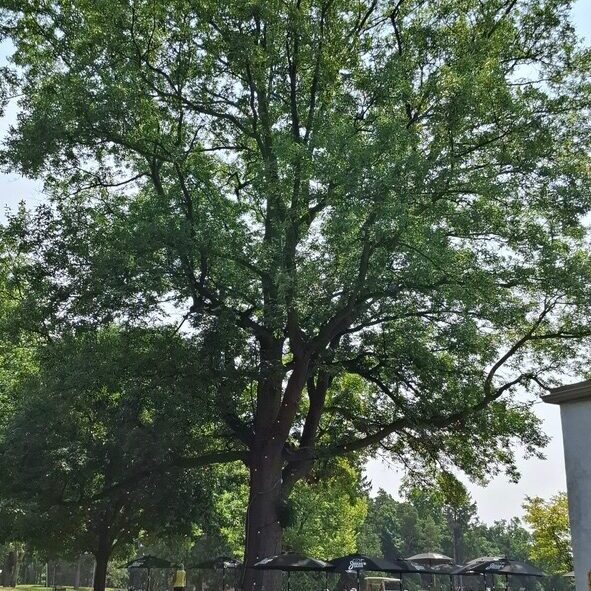
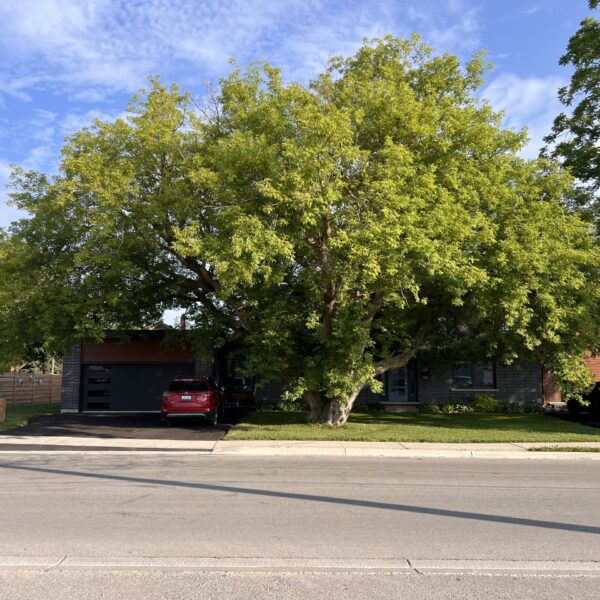
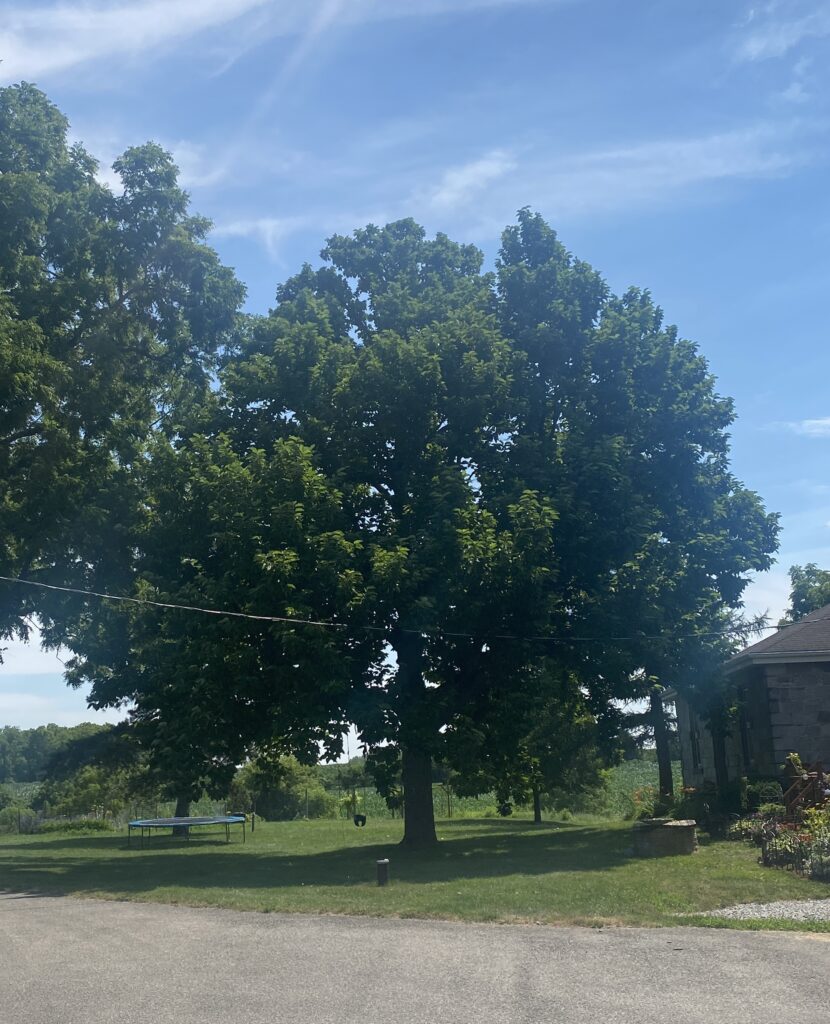
“This majestic Cucumber Magnolia is over 100 years old. The Cucumber Magnolia is Ontario’s only native magnolia and is endangered in the wild. It has unique green and yellow flowers in the spring and fragrant fruit that somewhat resembles a cucumber! They are typically located in Niagara Region and Norfolk County, but this cultivated magnolia has thrived for over a century in Brant County. Years ago, researchers from the University of Guelph would come to view the tree, and previous Mayor Ron Eddy would bring visitors, citing this over 100-year-old specimen to be the furthest west mature Cucumber Magnolia in Canada! We now have 7 smaller Cucumber Magnolias on our property including a second cultivated 25+ year old magnolia and 6 of their offspring, with more incoming, flourishing and proving to be more resilient in our Southern Ontario weather. Save the Cucumber Magnolia!”
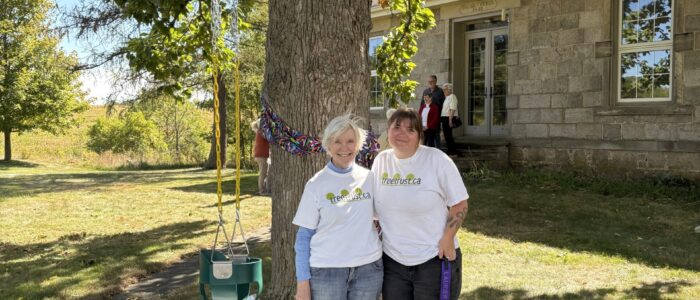
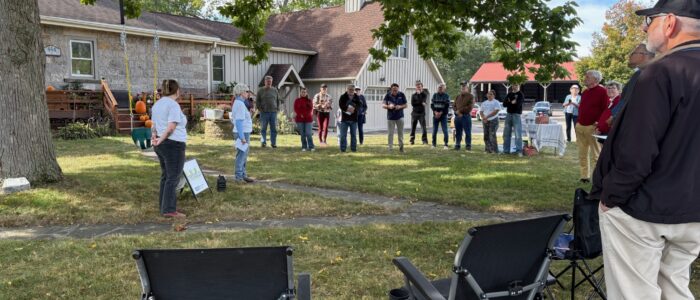
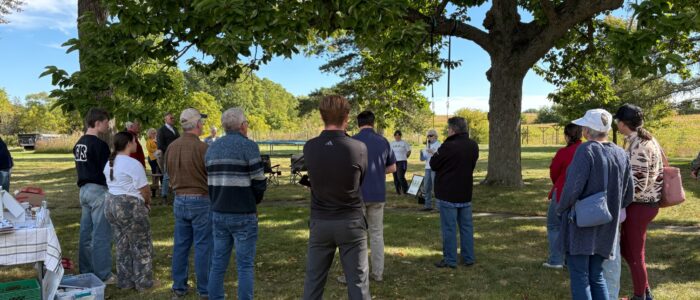
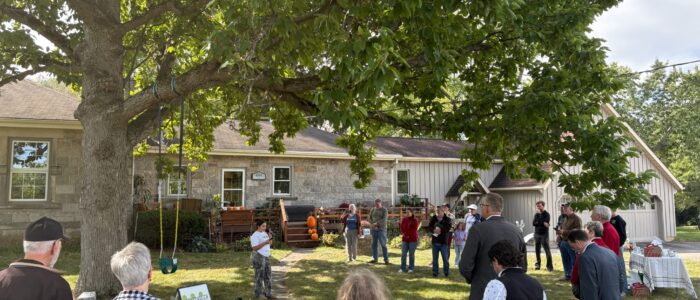
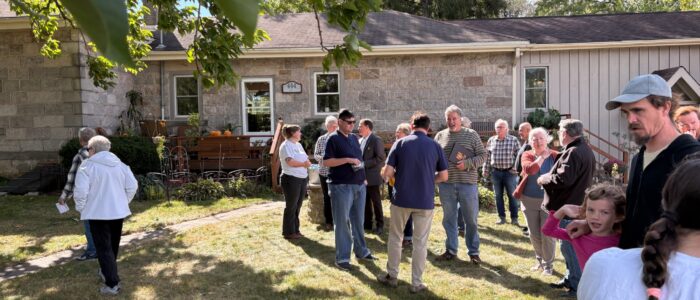
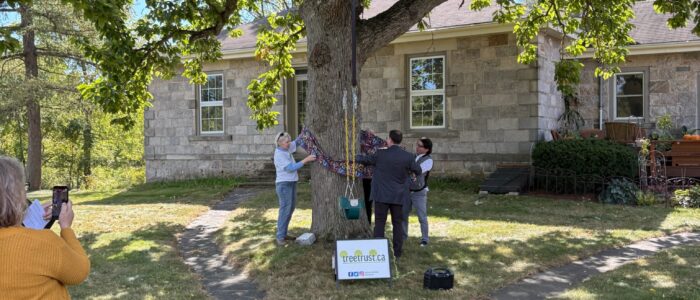
Winner Celebration 2026
2026 Honourable Mentions
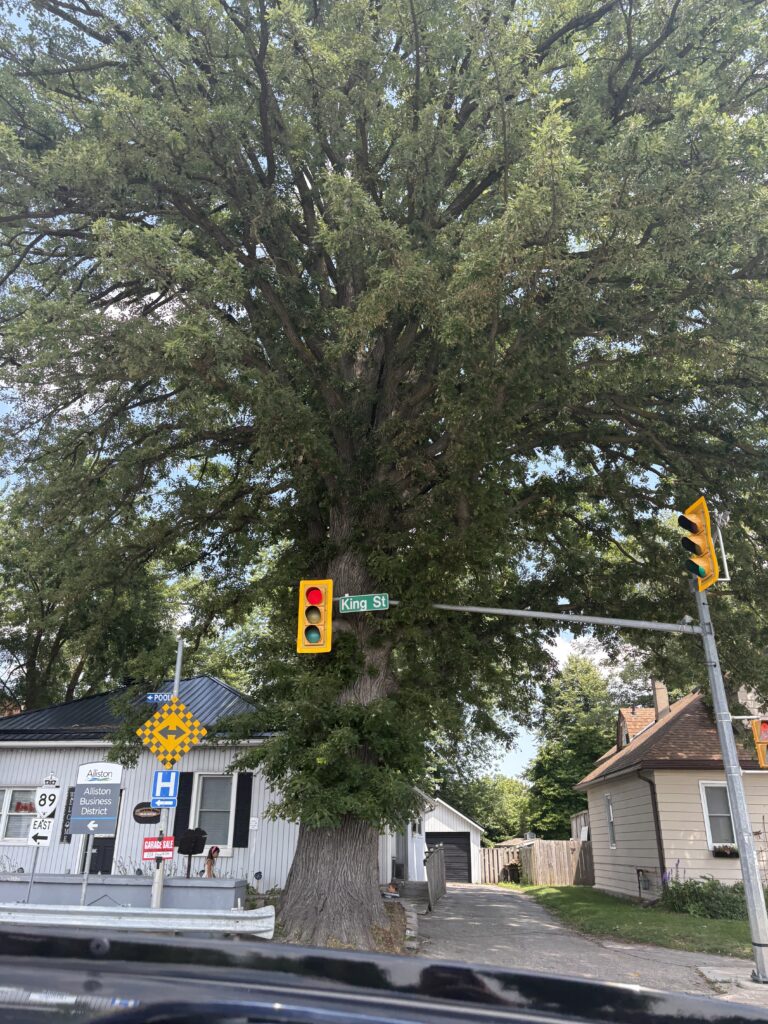
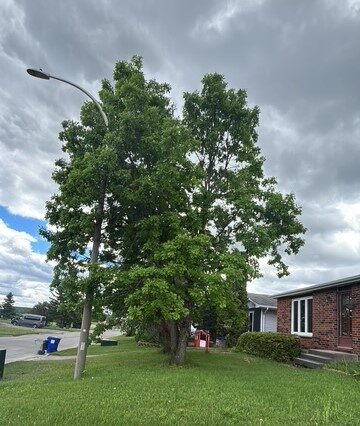
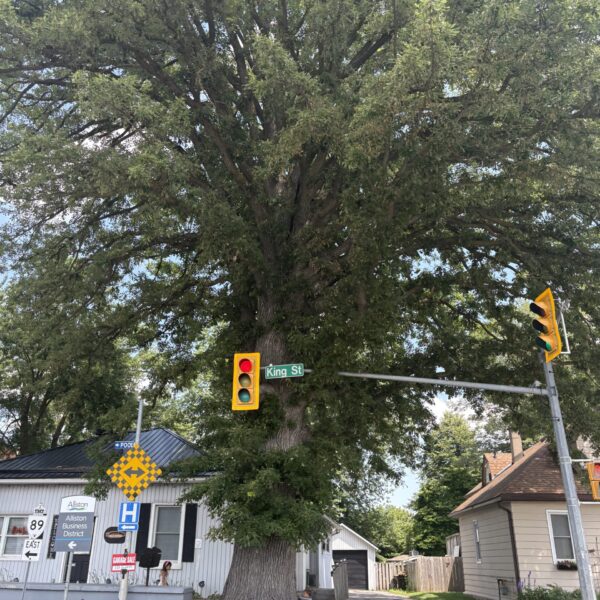
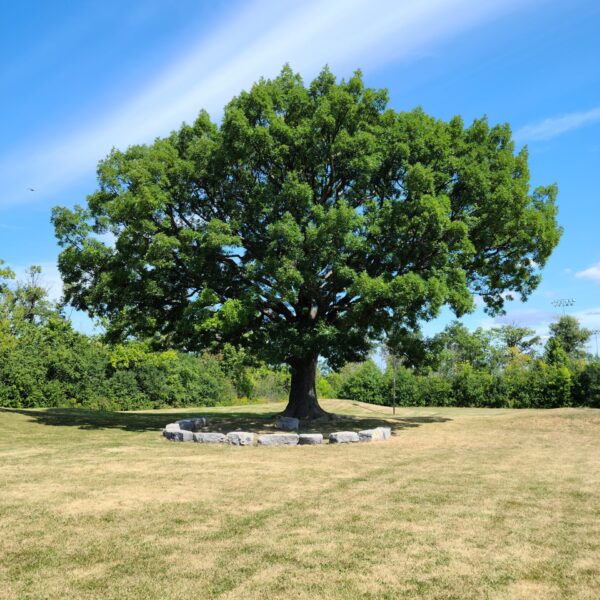
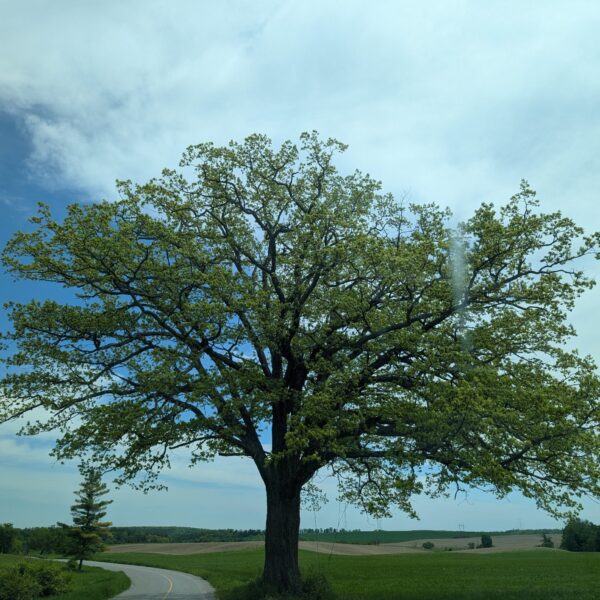
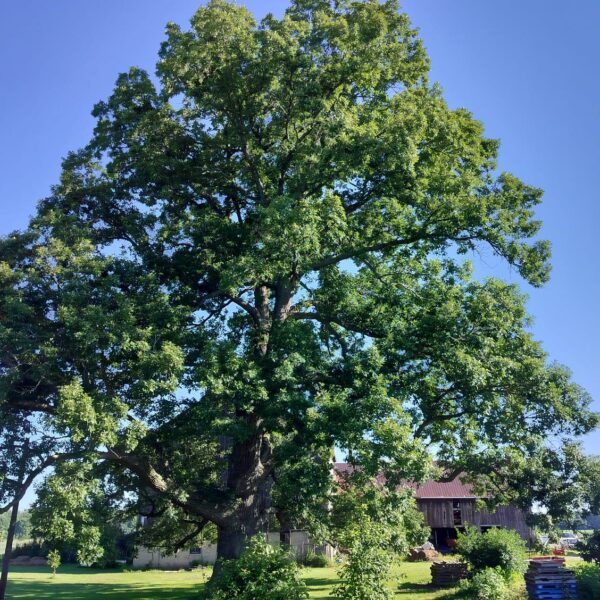
“The “Sitting Duck” Bur Oak is one of Simcoe County’s most celebrated heritage trees. Estimated to be over 270 years old, it has stood at the intersection of King and Young Streets in Alliston since before European settlement, witnessing centuries of Indigenous history, community growth, and the founding of Canada itself. Officially recognized as a Heritage Tree in 2005, the oak has inspired countless newspaper articles, public celebrations, educational programs, and historical performances that tell the
story of both the tree and the community that grew around it. It has also become a symbol of local stewardship after residents rallied to save it from road widening, ensuring its survival for future generations. Today, the Sitting Duck Bur Oak remains a beloved community landmark and a living reminder that our oldest trees are not only ecological treasures but also irreplaceable witnesses to history. Its enduring presence continues to connect people with the rich natural and cultural heritage of Alliston.”
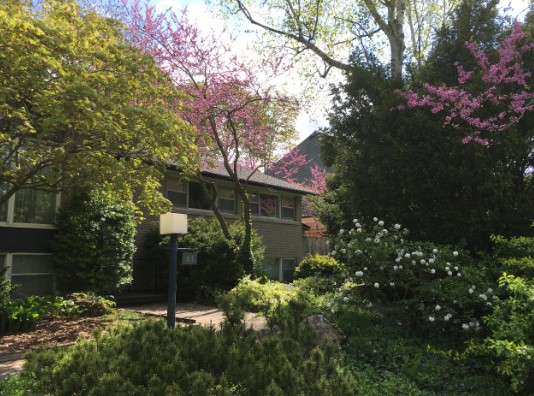
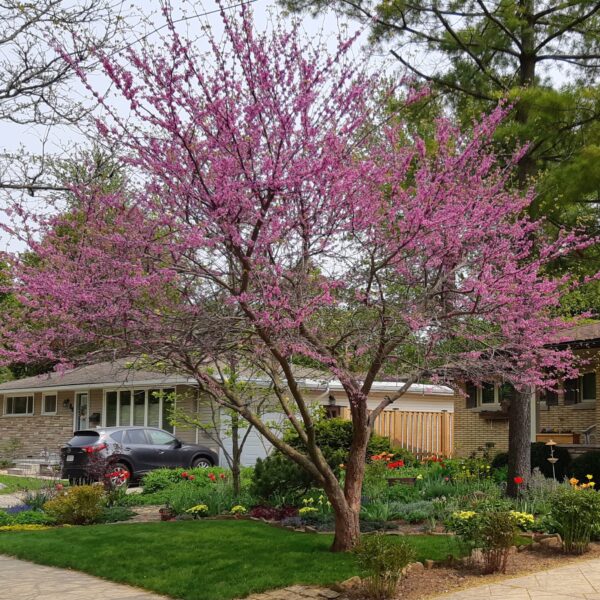
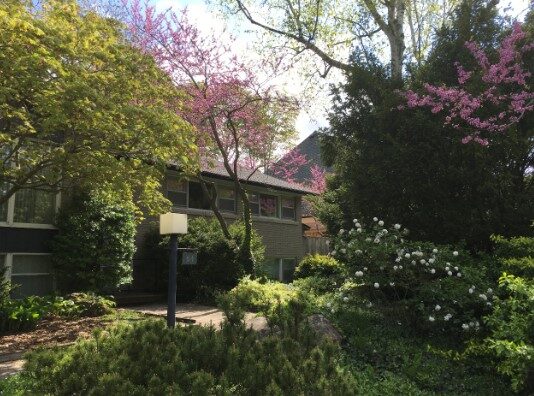
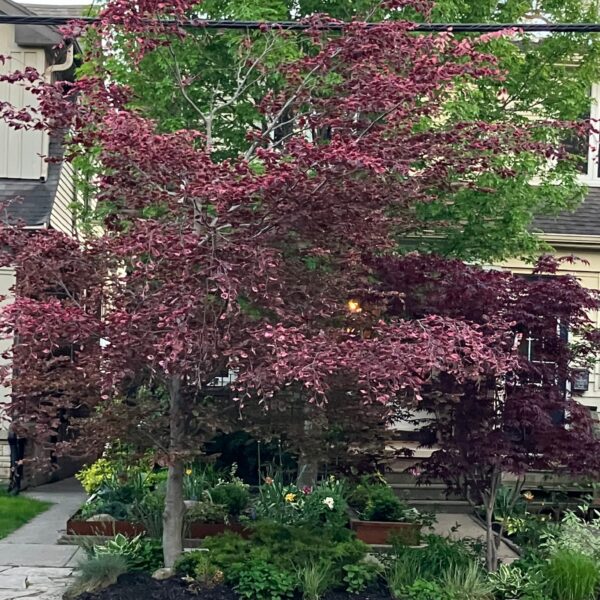
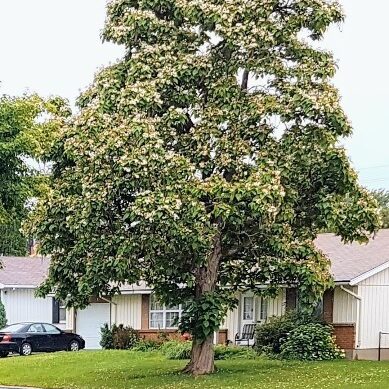
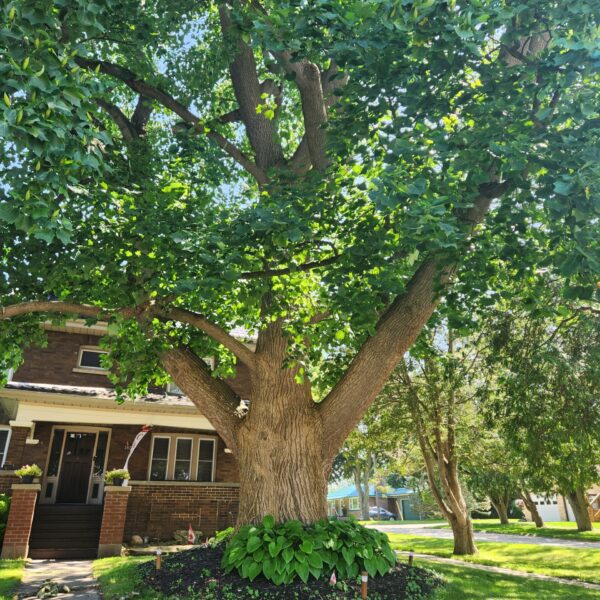
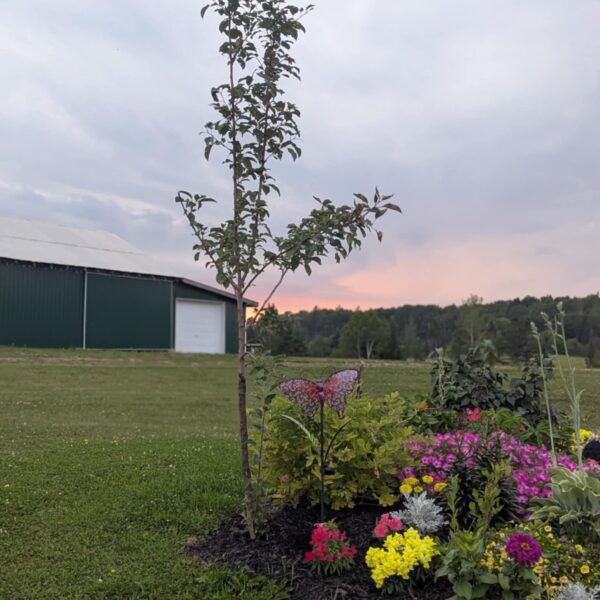
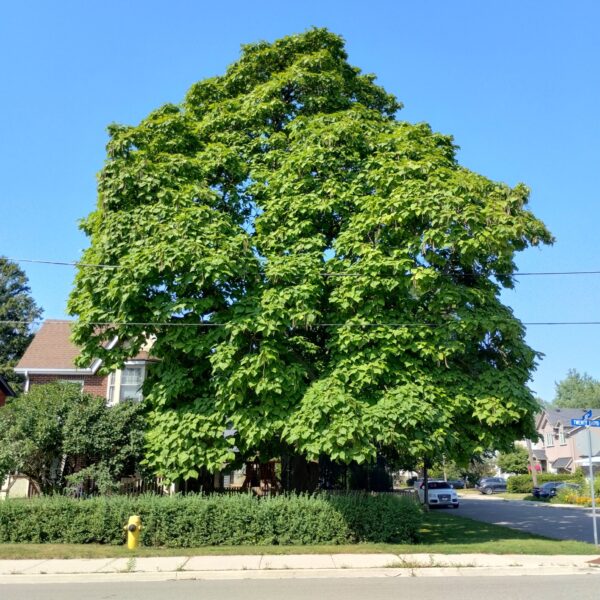
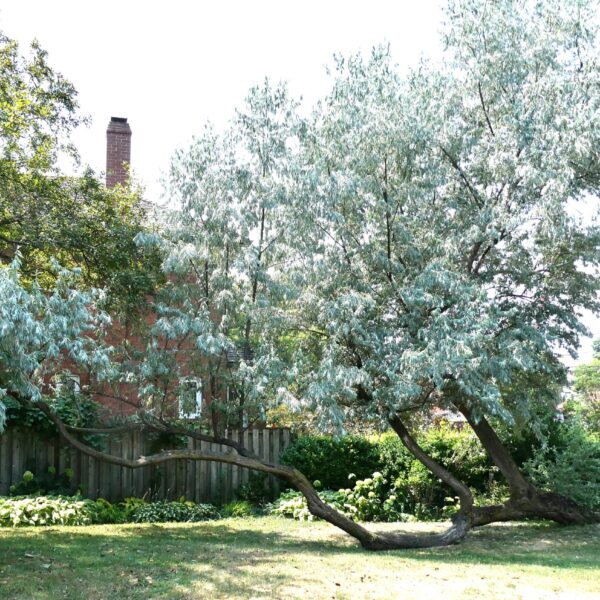
Linda Irvine nominated her tree for Guelph’s Tree of the Year contest – in addition to winning in Guelph, it was also chosen by our judges as the 2nd runner up in the Ontario Tree Pageant for 2026. Linda’s uncle, Victor Chanasyk, had a long and distinguished career in landscape architecture in Canada. Most notably, he was the Founding Director of the first school of landscape architecture in Canada, which was established in 1964 at the University of Guelph. After serving 10 years as Director, he continued to teach and contribute to the school. His academic roots were in agriculture and horticulture prior to studying landscape architecture and as such he remained interested in plant and tree propagation and stewardship throughout his entire life. Consequently, he was captivated by the idea of propagating these hardy Redbuds and giving them away to neighbouring homeowners to beautify the surrounding streets. These trees stand tall and vigorous today, lining Woodside Road in Guelph, some 50 years later. Victor, who died in 2006, would have celebrated his 100th birthday this year and so the coincidence of these Tree awards in this year is particularly special.
2026 Pageant Runway
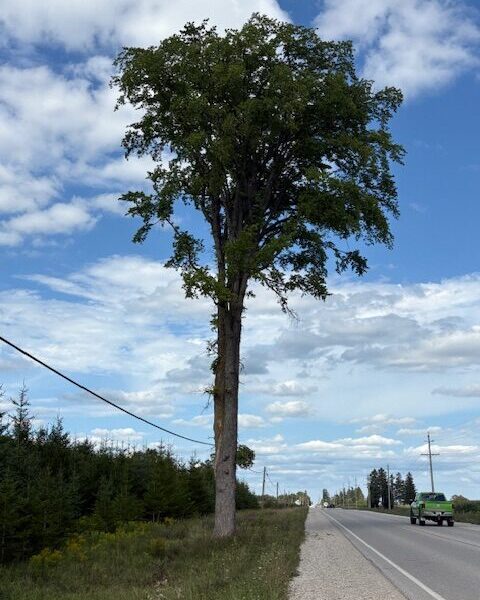
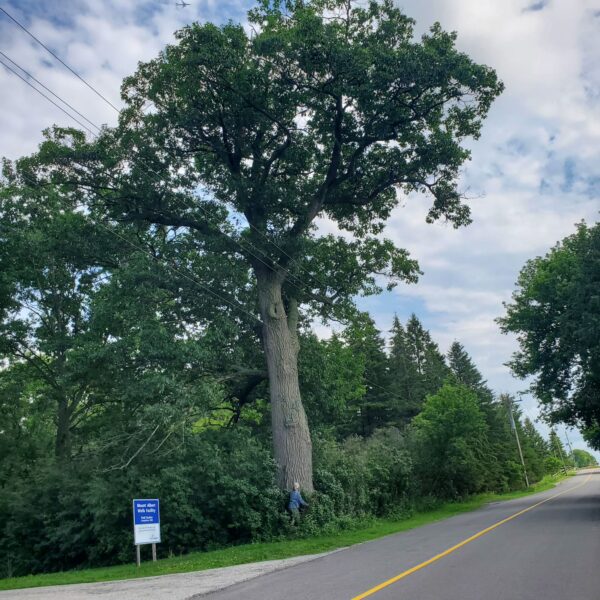
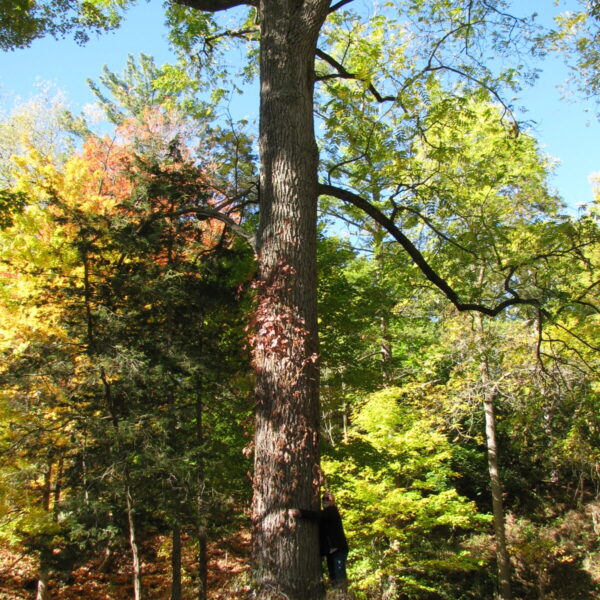
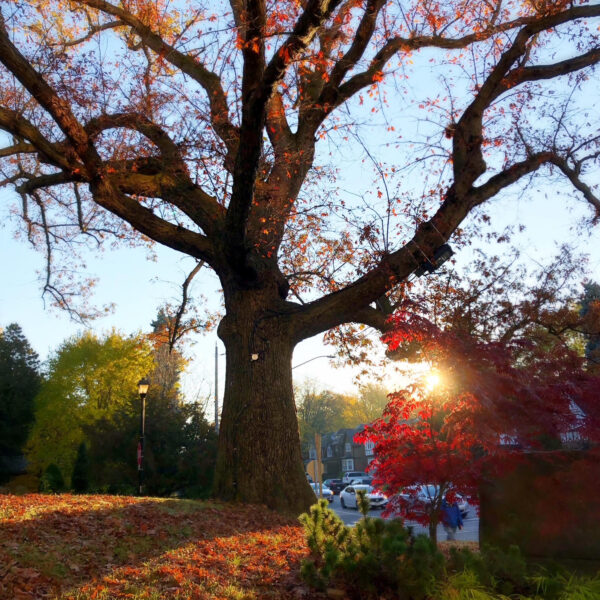
To me, this tree is the sentinel to the near north. Once I’ve passed it, I know I’m on my way to either the Beaver Valley for winter activities or kayaking/hiking in the Muskokas. At all my destinations my focus is on photographing wildlife and the beauty of nature, and it was only when coming back from another marvelous adventure that I realized the magnificence of this gentle giant that has watched over my passage all these years. I stopped and hugged it in gratitude. (I also measured the DBH and I’m pretty sure it was 89, but I didn’t write it down! If not that, then it was bigger).
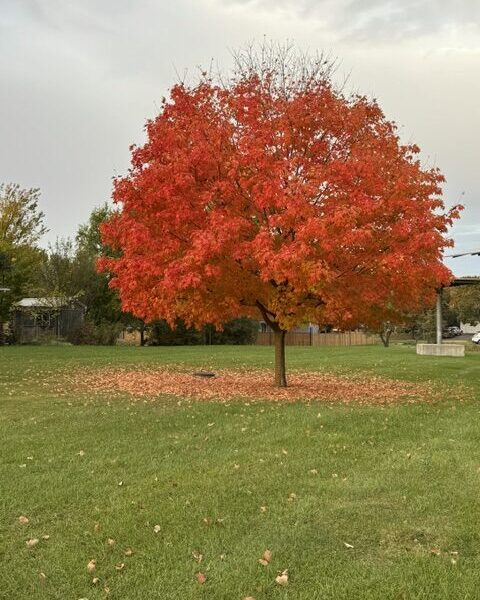
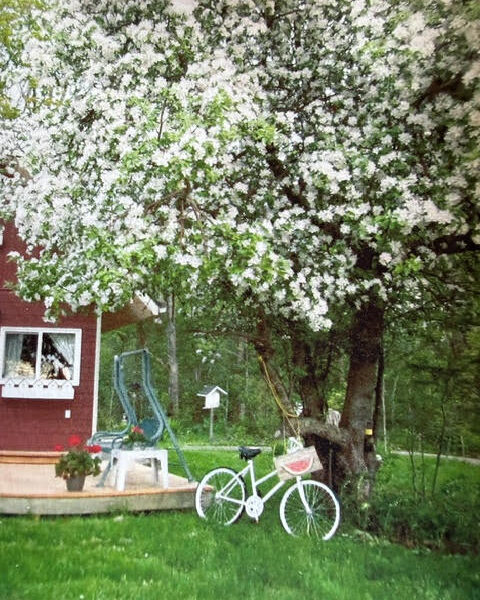
I took this photo last fall. It is located at Watford Memorial Park. It was hard to choose as so may were so striking in the park. Hope you enjoy its beauty too!
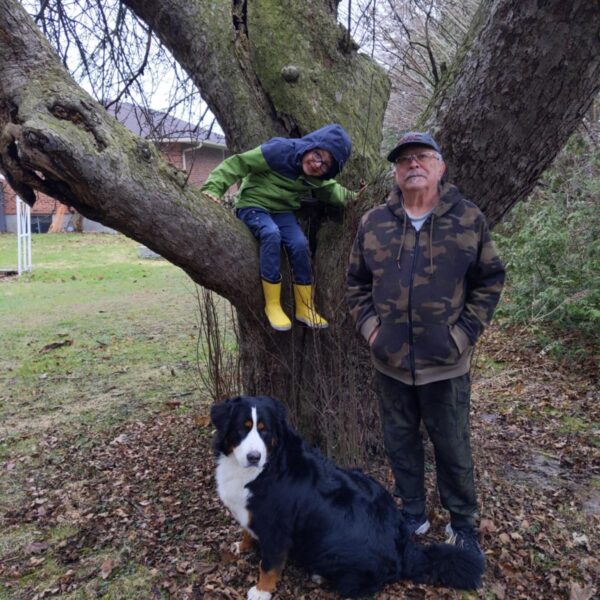
For 60 years, our faithful apple tree provided shade and fed the family with apples, cider, and desserts. Though gone, its legacy lives on, nourishing nature from its fallen limbs
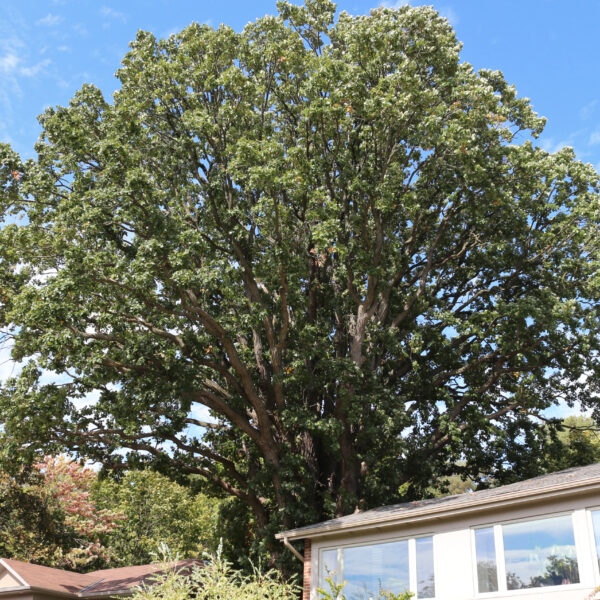
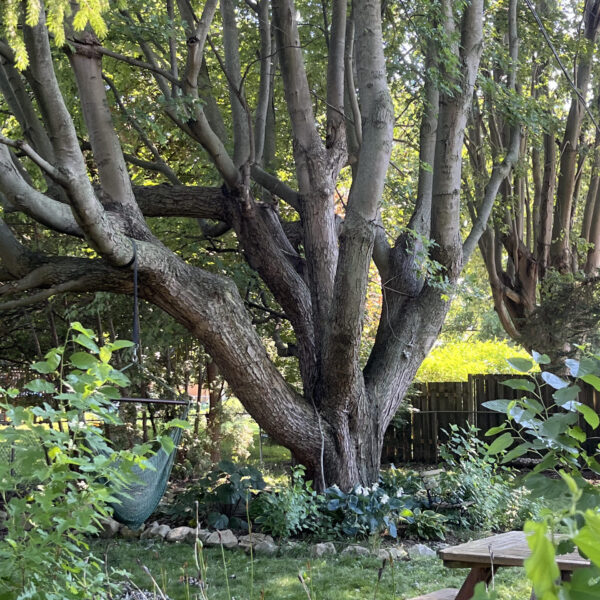
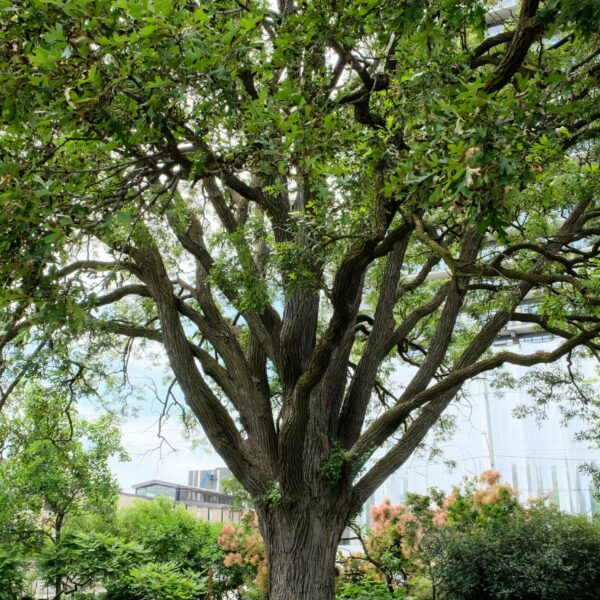
The English oak on Laurentide Drive is one of the most impressive trees I have seen in Toronto. Its trunk measures 17 feet in circumference (5.18 metres). What is remarkable about this huge tree is the great number of thick branches which radiate out from low on its trunk and rise up like an explosion. Viewing an old tree can prompt a consideration of what has gone on around it in its lifetime. In this case, a European oak leads me to ponder its association with the original colonists from across the Atlantic. The Grays were a prominent family who were key in developing what would become Don Mills. Members of the family who fought at Waterloo in 1815 were among veterans of the Napoleonic wars who were encouraged to emigrate to Canada with land incentives. The family would later take up this offer with James Gray who served with the British army in India, first to emigrate in 1816. This tree is estimated to be just over 200 years old. The English oak has been an important tree in the history of Britain. Houses, furniture, barrels and more were constructed from its strong wood. Of course, it was vital in the construction of ships, specifically those of the English navy until the middle of the 19th century. Perhaps with all this in mind, settlers brought acorns when they emigrated to bring something familiar, useful and emblematic from their homeland. James Gray, as a military man and farmer would have had an especially strong connection with the English oak. It’s this combination of the history and spectacular growth of this specimen which makes it exceptional. English oaks can live for more that a millennium—making this one just a relative youngster with many more years hopefully to go.
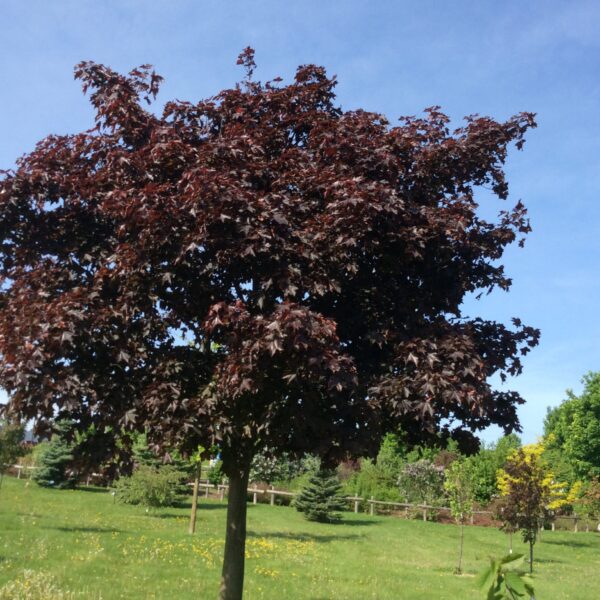
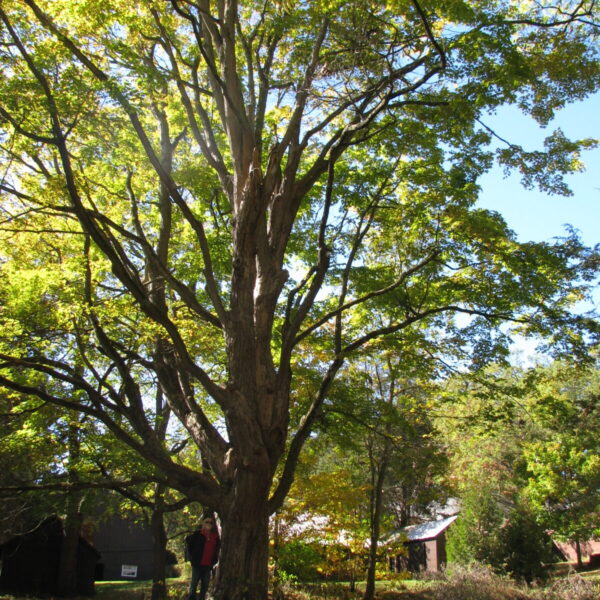
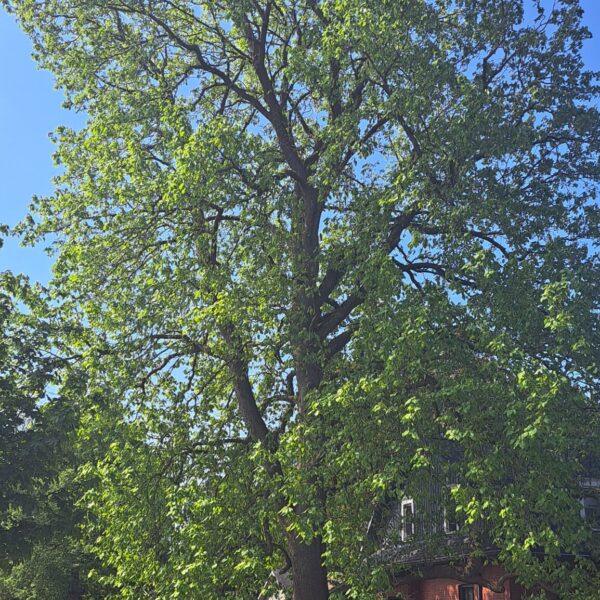
This Eastern Hop-hornbeam had been rooted in the property we chose to build our home on for over a hundred years before we arrived. When we built, we positioned our home to take advantage of the best views of the tree, majestic and full of character. Now we watch it change with the seasons, from gnarly upraised limbs in the winter to a full burst of sunlit leaves and seeds in the summer. It's currently home to a family of robins. We often sit with our own family and watch the birds swoop in and out of the Hop-hornbeam in the afternoon light.
Our beautiful black Walnut is named ‘Ocean of compassion and light to all who are troubled’ or ‘Ocean’ for short…When we purchased the house, the canopy of the tree was so large that it met the hedge below and completely prevented you from seeing the park. After 9/11 we wanted to let the light in so we trimmed the hedge and raised the canopy. Our 83 year-old neighbour said that it was the first time she was able to see the park in 35 years. Having three boys, we also included Ocean in our playtime. A popular game for Ocean was to let the boys stand on our deck and aim/throw the football through the V-shaped portion of Ocean. Ocean and I thank you for giving us the opportunity to enter the contest. I have assured Ocean that no matter what happens we will always love her, and she will always be part of our family.
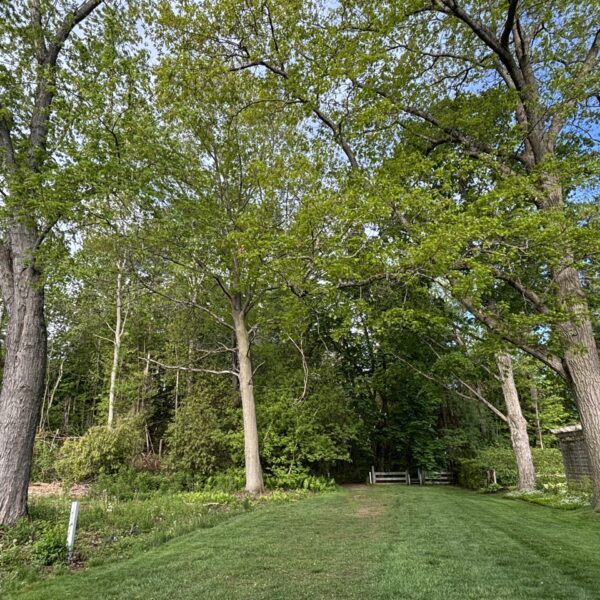
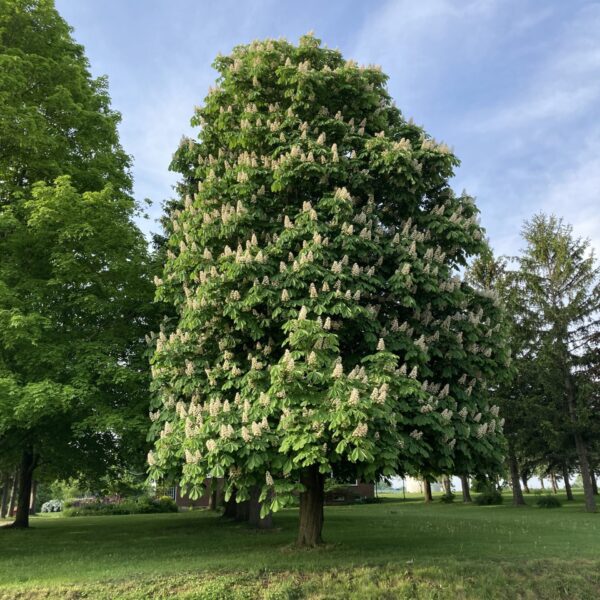
This property was once owned by Dr. Frank Sibbald….I’m told he planted the trees about 200 years ago. At the fence is a chestnut (in bloom). On each side of the laneway is a pair of maples and a pair of oaks. It is unlikely the trees are in any danger — two on my property, one on inn property, two on a golf course. Trees were planted all along the road as well — some bid conifers have come down but the standing trees are of the same vintage.
15 years ago my husband and I bought a 100 year old house in the village of Sydenham. In January 2017 our house unfortunately caught fire and was destroyed……We were insured and rebuilt the house on the same site, as we loved the treed lot that surrounded the house. To one side of the house there were two majestic maple trees, but sadly, a year after the house fire one had to be cut down as it was becoming dangerous. To the side of this tree was a small sapling, growing sideways to get light , and when the main tree was removed I spent several years gradually pulling this tree to a more upright position. This sapling has thrived! It is growing straight up and is now at least 20 ft tall, and to me it represents all that is good - we have a new house, a splendid tree, and all is well in our life. Here is my very special tree, around the base are stumps, remains of the original tree, that now form a stumpery that is home to insects and small animals and many plants!
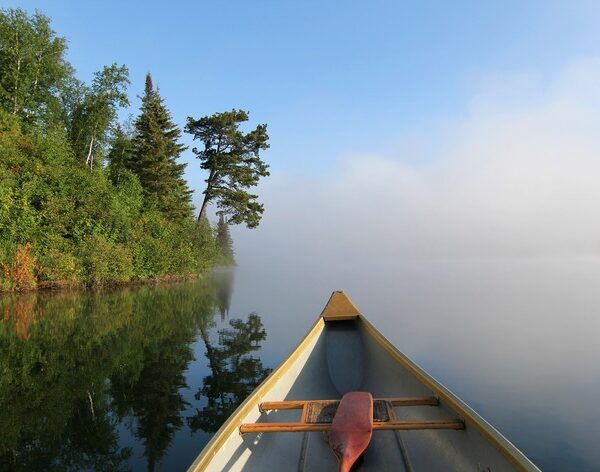
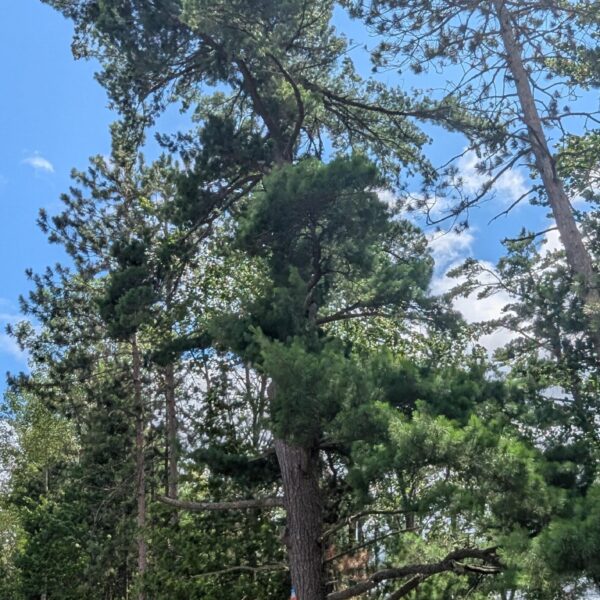
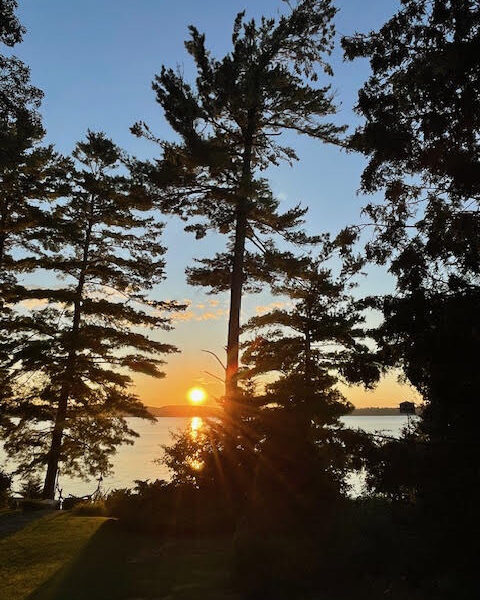
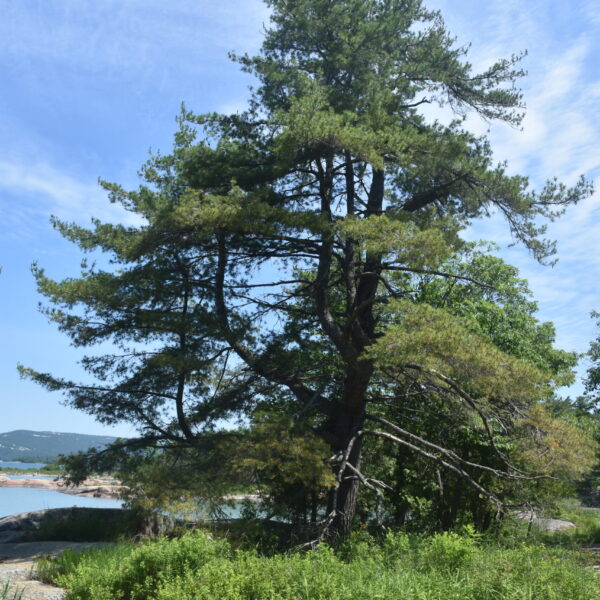
The tree of peace. The Eastern white pine (Pinus strobus) is Ontario's provincial tree and my favourite. It was called the “tree of peace” say Indigenous peoples' aimed at uniting five Iroquois warring Nations during confederacy. White pines are impressive as Ontario’s tallest tree with a straight trunk and feathery needles. Because of their straight trunks they were massively logged at the turn of the century to feed the European ship building industry. The large white pine tree I quietly paddle past in my canoe in the early morning hour stands mighty along the shoreline of my favourite lake. It feels like my protector, my talisman and elicits a feeling of reverence and passion in me. My tree has been battered by storms, branches have been broken off from lighting strikes but it still stands tall and stately. I’ve seen bald eagles perched in its branches and when the wind whistles through its needles it is one of the most peaceful sounds on the planet. The world is a mercurial place these days and branching out in a canoe along a green shoreline at dusk hearing the loon calling in a far off bay with a towering white pine as my guidepost is the closest thing to heaven on earth that I know and love.
My cherished old Cherry tree. Estimated to be 150 years old. I have protected her with a shoreline protection barrier as erosion was advancing towards her. Twice a year I have an arborist do a deep root fertilization. Tiny cherries feed the grateful birds.
Hello! Here is my big beautiful lovely awesome oak tree which I dearly adore. It not only provides shade in the hot summer but makes my mental health a lot better when I can read a book under it, ground myself and meditate.
I think it should win best tree in Ontario! All the way from South Porcupine!
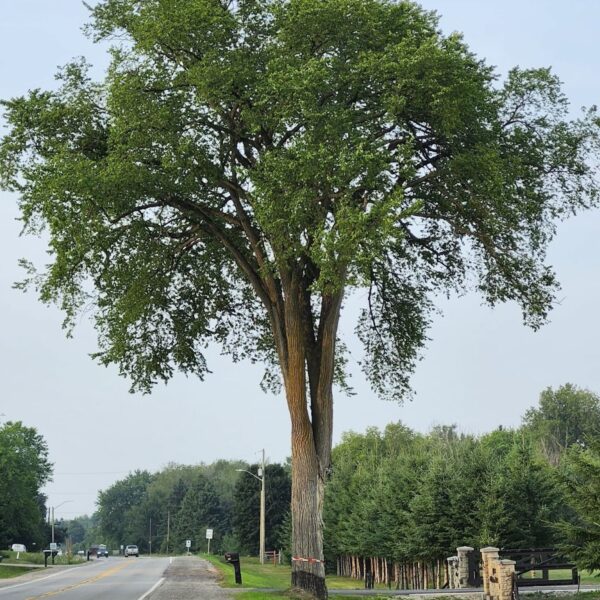
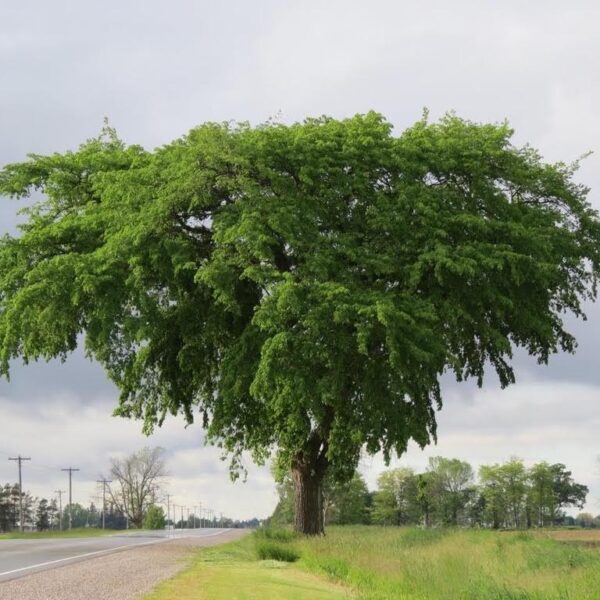
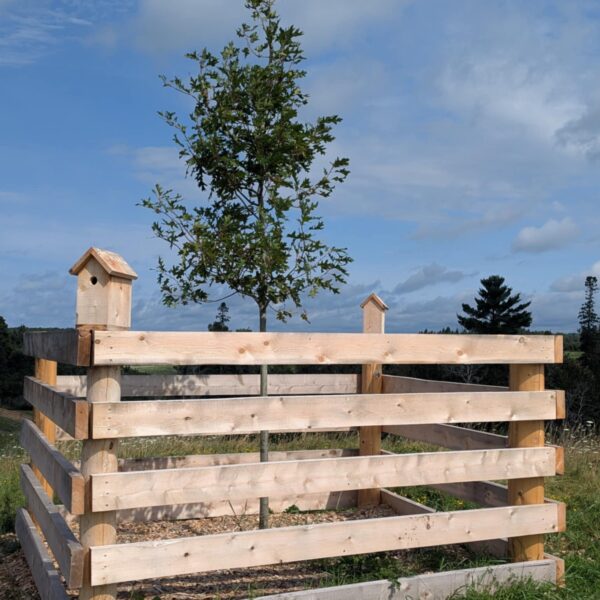
"Henry" the American Elm wins 2026 Town of Erin Tree of the Year! This special tree received over 60% of all votes cast - almost 300 votes total. It is prided for its resilience and impressive stature, and is loved by all residents.
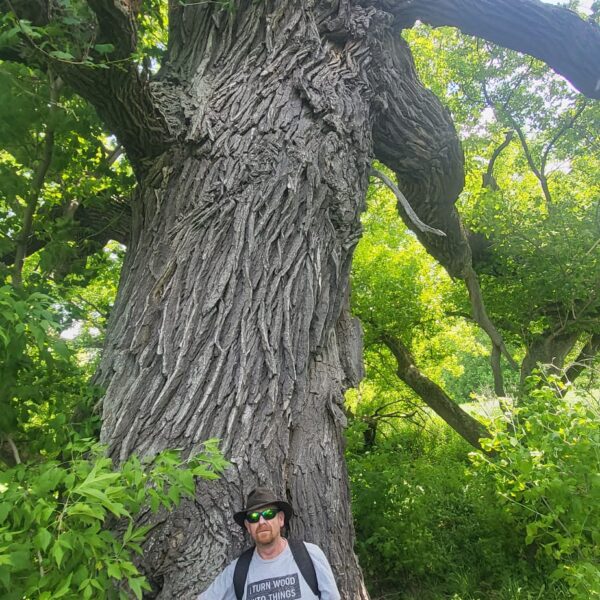
I'd like to nominate a Bur Oak tree that has been quietly growing close to the banks of the Grand River for probably centuries. Since it is growing in the wild, I have no way of doing actual measurements other than the circumference which comes in at about 260 inches. It has probably been standing there since before the region was even a glimmer in anyone's eye. This tree is special to me because, as a wood sculptor, my entire process is about trees. This one definitely needs to be preserved.
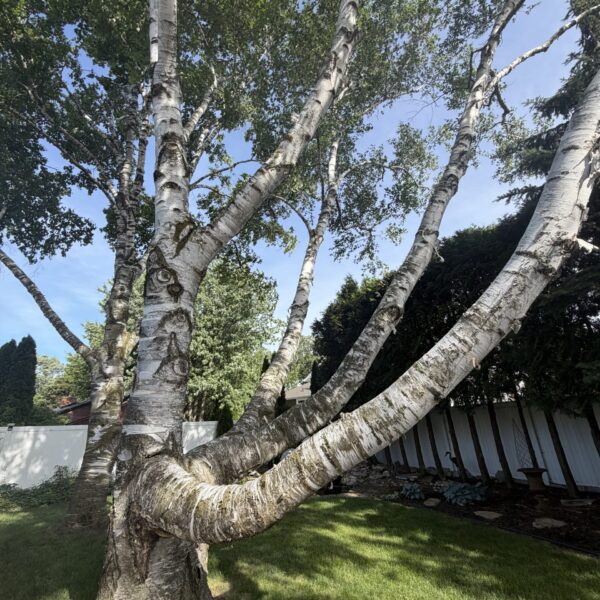
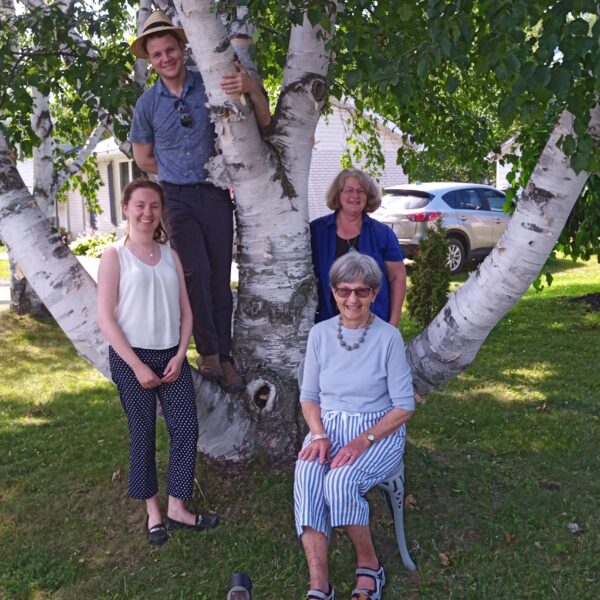
Four years ago, this majestic white birch welcomed me with its open arms through the back gate. I bought the house for its magnificent presence. Likely the largest in Windsor-Essex, it remains my backyard oasis.
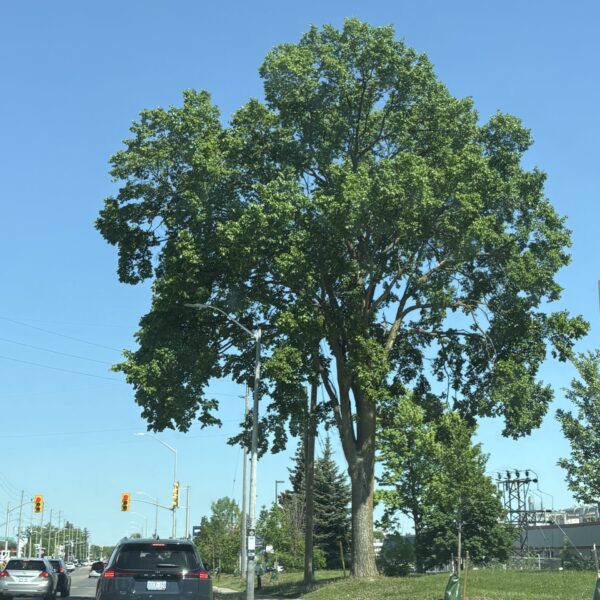
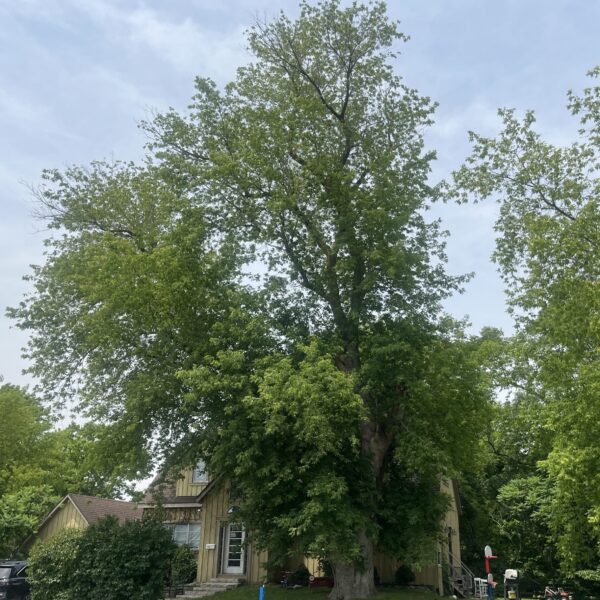
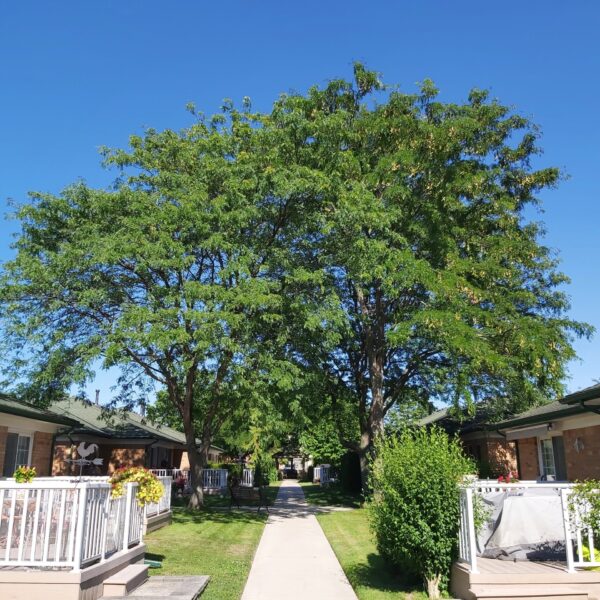
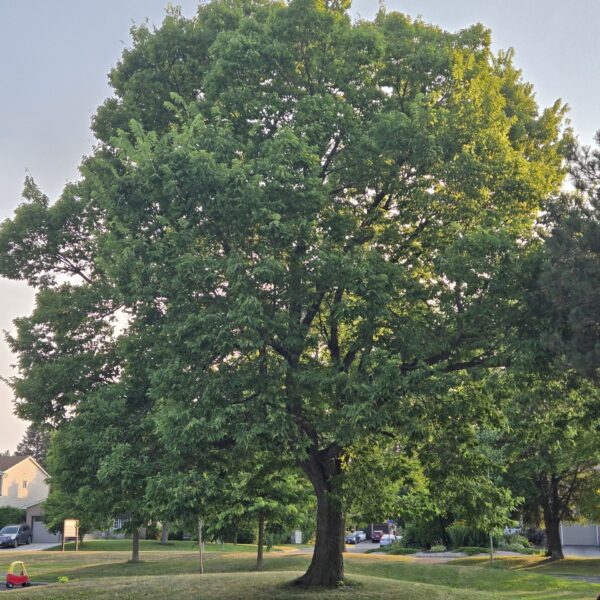
I would like to nominate this stately elm to win the 2026 Ontario Tree Pageant. It takes my breath away every time I drive past it in Georgetown, Ontario. There is a GO bus stop right beside the tree, so people are often sitting beneath its canopy, enjoying its shade while they wait. What I love most about this elm is its full, bushy stature. Elms are quite tall, but can appear somewhat sparse and "leggy," but this one is lush and magnificent. It is incredibly tall, beautifully shaped, and truly a standout tree. To me, it represents both the beauty and the value of mature trees in our communities.
I have a Manitoba maple for your consideration. I like to call our tree "Grandmother Maple". She has a trunk circumference of over 3 metres. Located in Aurora, Ontario.
I'd like to give my maple tree its moment in the spotlight so I've attached a photo of it.Thirty-years ago she was brought here to Baltimore (north of Cobourg) from my hometown, Port Credit.We enjoy watching all of nature playing in it: chipmunks, red squirrels, chickadees, finches, hawks and ravens.
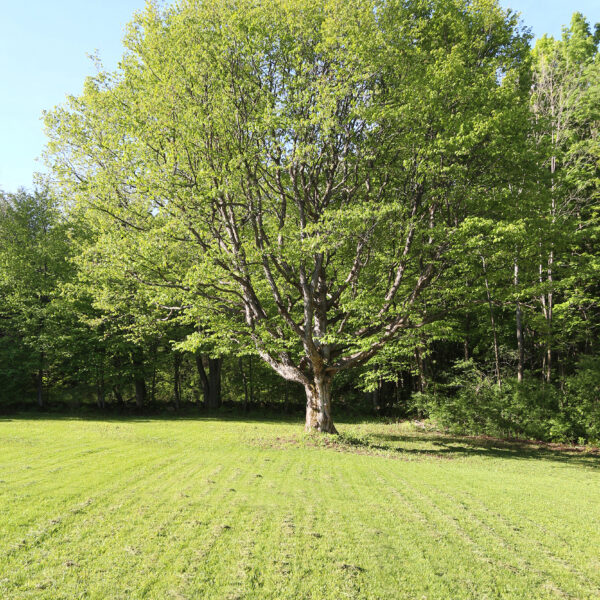
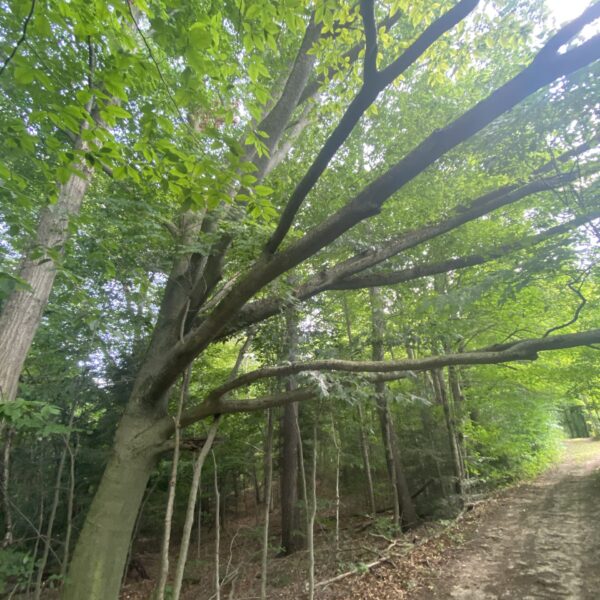
I found these beautiful, old beech trees on the Bruce trail in the Beaver Valley section outside of Blantyre. I think they are beautiful.
Meet Old Lumpy, a 100-year-old sugar maple who became a good friend to many during Covid. A life saver. He even had an answering machine during COVID to talk to lonely human friends. He may not be a big grand Oak or a flowery Magnolia, in fact, he is pretty ugly, but loved by many in our town of Guelph at our neighbourhood park in the Old Exhibition grounds of Guelph.
In 1981 we visited the Aurora cenotaph on Yonge Street with our three (now adults) children - they were excited to find real walnuts and insisted we plant them. Only one blossomed and is now towering over all our other trees at c. 60 ft tall, 70 ft wide. Many people stop at Confederation Park to compliment them.
As a proud individual privileged enough to have such a giant oak in the front of my home, all of my neighbourhood has told me that this magnificent tree has breathed for supposedly two whole centuries, witnessing the shift of seasons and that it is one of the pulses of this neighbourhood flowing with all aspects of life. It does not just grow toward the sun; it reaches for history. Its height is a testament to the patience of time, standing tall long after the houses around it have faded into memory.
This huge specimen is located on Donnybrook Drive Dorchester Ontario
It was a tiny plant our daughter grew for school and once it came home was planted in the front yard. We would estimate it is about 50 years old.
Hope you enjoy
As my Red Oak seedling sprouted about 200-250 years ago, around 1776 in your time, the Chippewa of the Anishinaabeg Nation, among others, used this high ridge for travel. I am growing on what is sometimes described as the Algonquin Ridge, a corridor between Lake Simcoe, Georgian Bay and the interior forests of East Gwillimbury, previously also used by the Omamiwinini and the ‘Huron-Wendat’. As a sapling, I was surrounded by a forest of my kin. When I was about 50 years old, Quaker pioneers arrived in the area and began clearing for agriculture. Now people from across the globe clear for homes and lawns. I currently stand less than one metre from the paved road. Fairly recently, the Region of York created a well close to me to tap the reservoir of water my people helped to maintain. In doing so, they paved a driveway access and started clawing at my roots to create a lawn. Luckily some kindred spirits made them stop. Even more recently, a fibre optics company wanted to drill a small tunnel below me to feed fibre optic cables through. Luckily some more kindred spirits made them re-route it. I am a ‘Mother Tree’. More important than my own life, I care that my offspring carry our genetic codes to the future. My message to people is that you need to become hospitable and create space for life or lose your own basis. Humans have had 250 years of my gifts. Where is the honour and the respect? This ‘Wiisagi Witness’ tree is currently 85 feet tall with a circumference of 15’8” at 1m height. It is located on Centre St., Mount Albert, Ontario, near the corner to Herald Rd. just in front of the York Region Well site. It has been teaching me to stand up better.
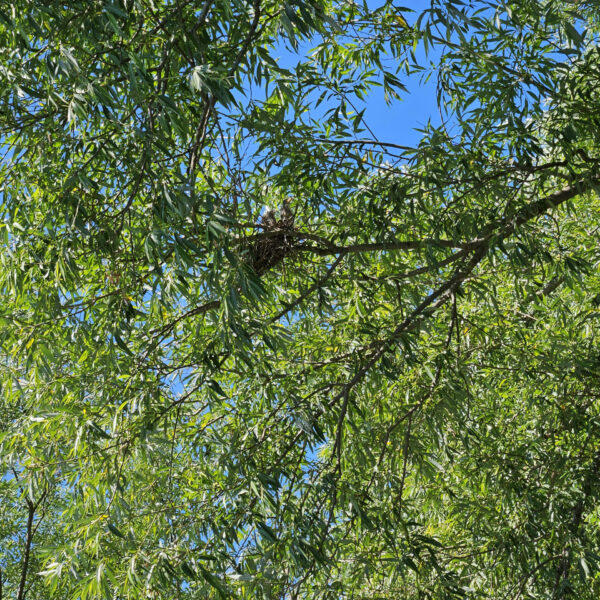
This tree provides shade along the north shore of Lake Victoria in Stratford, Ontario. As seen from the Juliet lll river boat, this tree also provides habitat for baby herons. There are so many amazing trees in Stratford that could be nominated. This tree is special to us as we coasted under it and saw the baby herons with our 4 year old granddaughter. This was both a memorable experience and an example of the importance of trees.
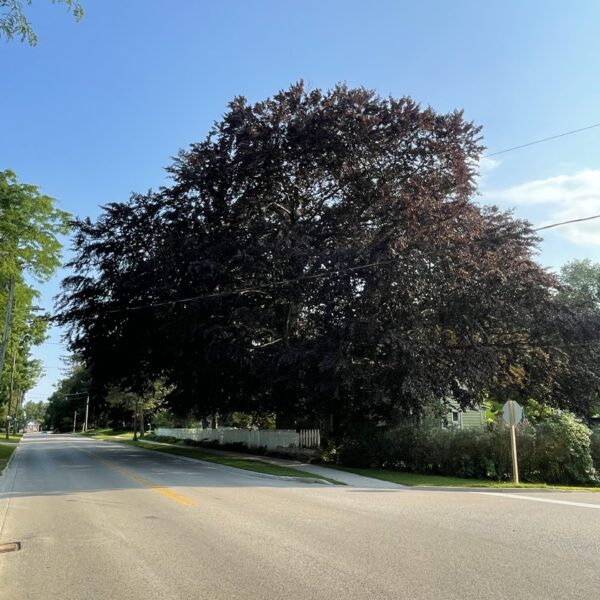
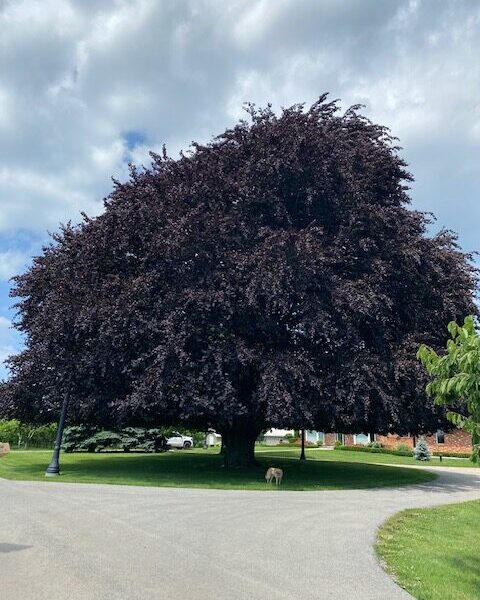
I'd like to nominate a Cooper beech tree - somewhat of a rarity in the Ontario ladnscape being a cultivar of the standard beech. However, this tree is 1 of only 2 that I know of that are at least 150 years old! One is in Bayfield and this one is in Sparta - both being historic villages in S/W Ontario. Perhaps there is a link between the two in the planting of copper beech so long ago? The Sparta tree sits in the front yard of a heritage home and majestically spreads over the house and road. The trunk is at least 1.2 meters in diamter. This is a uniquely spectacular tree worthy of an award.
This is a maple tree that is on the edge of my property it is very pretty and stands alone from the other trees. I like looking at this tree.
We have many favorite trees but the one that has given us so many memories is our beloved Apple tree in our garden.We have spent our mornings and evenings under this tree that has provided us a cool sheltered space to read, dine, chat and snooze.
“ Pretty in Pink! “This lovely tree in St Catharines Ontario always signals that spring is inevitable and here to stay!
This is Mabel the Maple. She was planted by my Dad in June of 2011, in memory of my Mom who died the previous year. Dad passed just two months later. The tree, especially in all its fall glory, reminds us of them both. Mabel was damaged significantly in the ice storm March 2025. Her canopy may be a little lopsided now, but she's still perfect to us.
'Rosebud' - Eastern Redbud
*indigenous, huge, attractive
*over 30 years old, shady
*unique: magenta buds emerge along stems then delicate pink flowers
*large heart-shaped leaves
*prolific producer of seeds
I would like to submit my favourite tree. It is so unique in its look that it struck me as being very old. I have no idea how old it may be. I just love the look of it.
A Living Legacy:
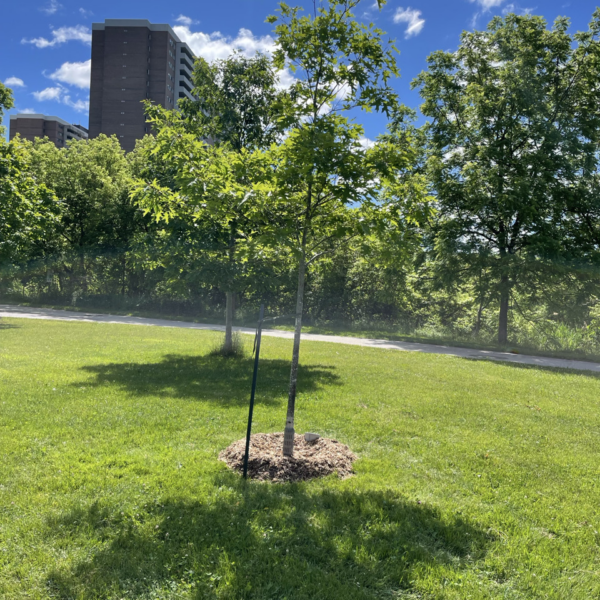
This red oak was planted in June 2026, exactly one year after my grandmother's passing. After months of waiting, I found it remarkable that it was finally planted in Scarlett Mills Park on that anniversary. Somehow, it felt as though it happened exactly when it was meant to. My grandparents immigrated to Canada in the early 1980s, leaving behind everything familiar to build a new life for our family. Through hard work, sacrifice, and unwavering love, they created a home where our family gathered, celebrated milestones, and built the traditions that shaped my childhood. My grandfather passed away nearly two decades ago, and when my grandmother passed away last year, it felt as though I had lost the final bridge to my childhood. As a parent myself, I now appreciate more than ever the selflessness and devotion that both of my grandparents gave to our family. The location of this tree was chosen with great intention. Visible behind the tree is the 20-storey Lambton Square building where my grandparents lived. Their apartment was on the 18th floor. From that balcony, we admired what always felt like a million-dollar view. The Humber River wound through the valley below, bordered by mature forest, the rolling fairways of Lambton Golf and Country Club, the peaceful pond, and this very park. Every season transformed the landscape, yet it always felt timeless. As children, we stood on that balcony countless times, never imagining that one day this exact spot would become part of our family's story. Looking up now, it's surreal to realize that the park we admired from above is now where their memorial tree has taken root. Standing beside this oak, I am greeted by the gentle sound of the Humber River flowing nearby. It brings a feeling of nostalgia that is difficult to put into words. It feels as though the landscape itself remembers. I chose a red oak because I wanted a living tribute that would endure. Knowing that it may stand for two centuries brings me comfort. Just as my grandparents planted roots in Canada and built a future for our family, this tree now carries their legacy forward. My grandparents' apartment is no longer in our family's possession, but this tree has become our new place to return to. This tree will help, my children can remember their great-grandmother, whom they were fortunate to know, and learn about their kind great-grandfather, whom they never had the chance to meet. Memories will continue with the towering view of the condo that was my home away from home.
It is the magnificent, beautiful, and native, 80 year old, approximately 30 m high and 150 cm. dbh, Cucumber Tree (Magnolia acuminata) located on the property of 75 Wellington Street w. in New Tecumseth Ontario. Aside from being recognized as a heritage tree on Oct. 14, 2006 and a species at risk in 2008 due to it limited range, and habitat loss, as noted by the Canadian Species at Risk Act, it has the distinction of being a tenacious outlier, one of few if not the only tree of its kind to withstand the challenging latitude, zone 5 climate and urban constraints of New Tecumseth. This unique, ecological and cultural import rare tree deserves to be recognized for its extraordinary determination, the inspiration it has provided all those who have and continue to admire it, and for its immeasurable contributions to the other than human lives it supports. Thank you for supporting this pageant, providing a stage for my submission and others and for helping to raise awareness to the important role trees play in making our urban environment livable.
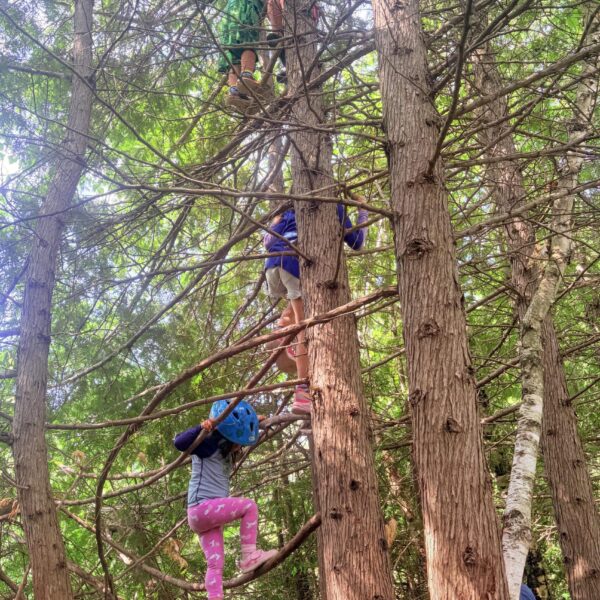
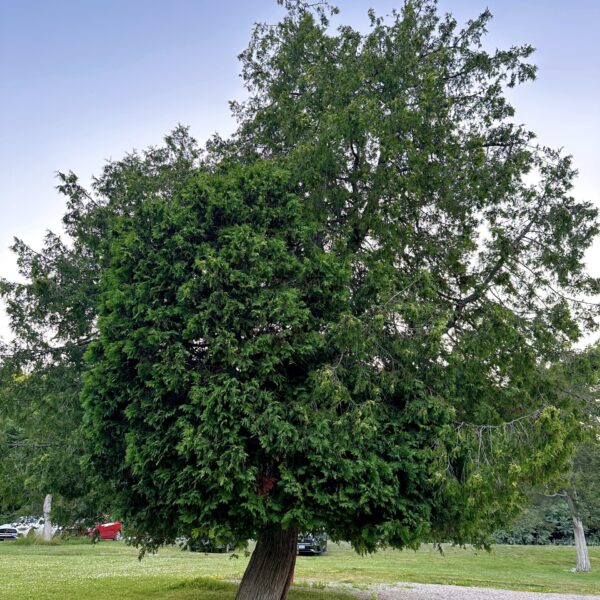
Welcome to "The Climbing Tree". While this may look like a regular cedar, the impact this tree has had on countless children as they learn to connect and appreciate nature is immeasurable. For 12 years, I have brought children from my licensed home daycare here to bask under the canopy, play hide and seek, and learn to climb. The lower branches provide the perfect first steps into tree climbing, where even the tiniest friends can hang on and step up onto a limb. As the friends watch their older peers and learn from their skill and love of this place, they begin to move their bodies up, up, up. This process, of being taught by The Climbing Tree's gentle and welcoming branches as well as older friends, before becoming a teacher to new friends, repeats year after year and stretches this connection to the land and this beautiful tree through friends and families. The Climbing Tree is our teacher and friend, offering a home for blue jays (we even found a baby grouse at her trunk once!), shade from hot days, and shelter from winters chill. This tree, with smoothed out footholds and branches that are perfectly spaced for play, reminds us every day that trees are life in so many ways, and worthy of our deep respect and love.
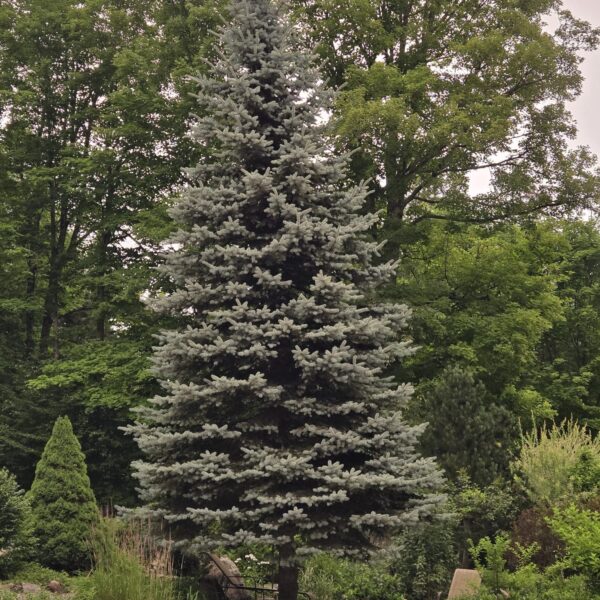
Here is our Blue Spruce. We call it the Bird Condo, so many birds have used it to nest.
At the heart of our treasured community Green space stands a majestic Silver Maple, a native under which we have hosted Charlotte’s Tea Garden for 44 years at our annual Gathering on the Green. On Wednesdays Yoga in the Park is also hosted under the Tree which raises funds for the London Food Bank. I have attached a photo from the Tea Garden, Yoga in the Park and a history of the Trees of the Green as well. This is a beloved Tree.
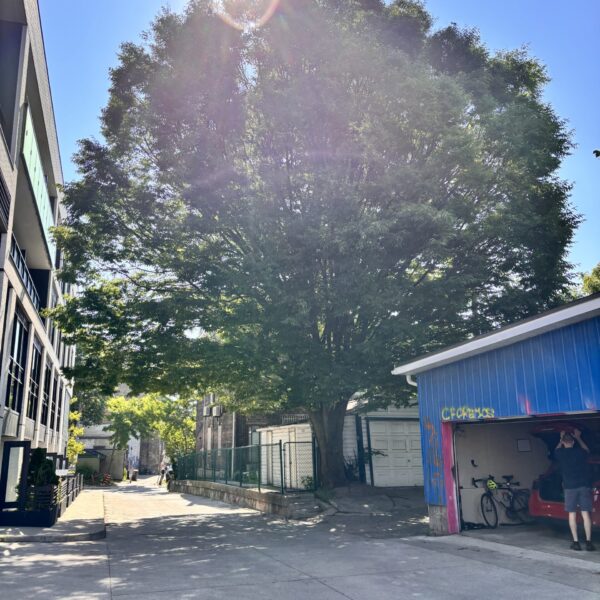
I am nominating this tree for the Ontario Tree Pageant because it is beautiful but more importantly manages to thrive despite its tough growing conditions as illustrated by the photo. It brings welcome green shade and beauty to our grey urban laneway in the Junction of Toronto. Our neighbours have hung several large wicker lights in the tree, adding to its charm. It’s a beautiful tree that lifts me up every time I see it.
My husband and I have lived at our home in Kitchener for over 40 years. This mighty maple has provided shelter and shade and hopefully when we have left it will stand the test of time for future generations to come.
Meet Ruby. Trees were dedicated to the deceased loved ones. Still able to admire its beauty, we adopted Ruby (Norway Maple). She's gorgeous, stately, healthy and has given us and others great pleasure. At the Aurora Community Arboretum.
Diameter: 102 centimeters
Age: c.155 years but could be older
Lifetime carbon sequestration: 14.15 metric tons of CO2
The story: This tree is hidden in a clearing at the north-west side of the Warner Preserve property and is situated in an elevated position. It is likely this tree survived through the harvesting of lumber during the time of the Brewster Mill in the 1850s and 1860s. It quite possibly was a sapling and not suitable for harvesting for lumber. A dam had been built situated on the Aux Sable River’s hairpin turn and by the 1850s, the surrounding area became known as “drowned land”. Landowners and residents in the area, not willing to wait for the courts to force the removal of the dam, took matters into their own hands and in the early 1860s burned the sawmill and tore down the dam.
Diameter: 96.5 centimeters
Age: 115 to 170 years, but could be older
Lifetime carbon sequestration: 6.9 metric tons of CO2
The story: This Black Walnut is growing adjacent to the Sugar Maple, in the lower “pit” area within the Warner Preserve. Black Walnut trees can live for over 200 years. They prefer a sunny location, on moist well-drained, rich soil. Along with its sizable girth, this Black Walnut exhibits old growth characteristics with thick, dark brown to black bark, deep and narrow interlacing ridges and furrows becoming more pronounced with age. They generally have a high canopy and as they mature they produce an abundance of nuts. Walnut trees produce juglone which is a natural compound, a form of plant toxicity which acts as a natural herbicide. This toxic substance damages plants growing under or near trees that produce juglone. For a list of Ontario Native plants that are juglone resistant, go to: https://www.inournature.ca/juglone-tolerant-native-plants
This magnificent Copper Beech Tree was planted in 1937 to commemorate the Royal visit of King George VI and Queen Elizabeth who visited Ontario in 1939. As most trees do, it has grown in height but its most impressive growth is its expansive canopy that stretches in an almost perfect radius on the surrounding lawn. It is a place to rest, look up and imagine you are in Sherwood Forest of long ago. Thus this tree has been dubbed the “Robin Hood” tree by the MacSween family.
At over 200 years old, this beautiful veteran tree is a piece of living history, tucked away within what used to be an old-growth sugar maple stand. Healthy and vigorous, it has been allowed to age and retrench naturally, largely undisturbed by people, development, or soil compaction. It stands on a hill overlooking the new Sunnybrook Arboretum—a living stalwart among the young trees that will hopefully carry its legacy for generations to come.
In the 1970’s my Uncle, Victor Chanasyk, who was a landscape architect, discovered a Redbud tree growing in a forest in Northern Michigan. He determined that this tree was very hardy to be growing so far north so he collected the seeds and propagated seedlings in his garden where I grew up. In the early 80’s he went around the neighbourhood and gave away little redbud trees to residents who wanted them on Woodside Road and Yeadon Avenue to plant in their front yards. For 50 years these two streets have been a blaze of pink blossoms each spring making the neighbourhood distinct and beautiful. The tree I am nominating is the first offspring - now old and crooked -but still majestic and beautiful. There are 8 other redbuds on our property. To me, this nominated tree demonstrates how one person & one tree & one vision, can bring together one neighbourhood around the beauty and magnificence of nature. This tree was also chosen as Guelph's Tree of the Year 2026.
This 200 yr old ( or older) White Pine stands at the top of the 66 step stairs to Golden Lake waterfront at Red Pine Camp. The camp celebrated its 100th birthday last year so this tree has watched thousands of campers make their way to and from swim lessons, canoeing , sailing and overall family fun. The camp was bought from the YMCA back in the sixties and continues to host families from across the country every summer.
Signs on the tree post the hours the waterfront is open and marks distances for bikers and runners. It is surrounded by red pines but stands tall above them.
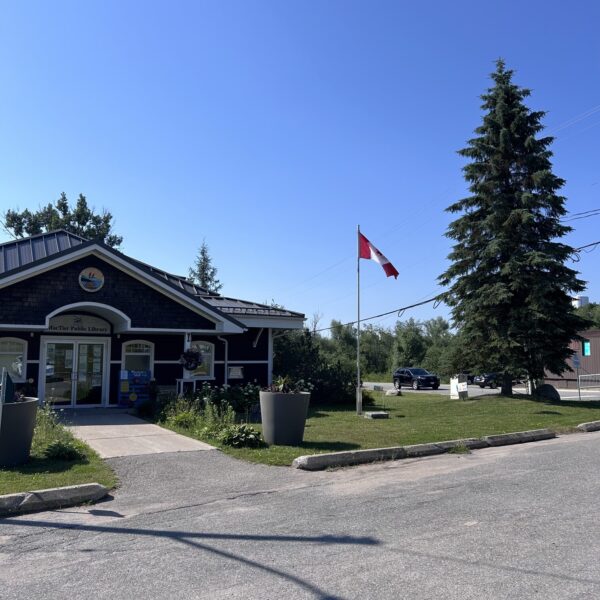
This is the tree outside of the MacTier Ontario Library. When were at the cottage and we come to town we see this tree we know we can reconnect with the world - they have wifi!
35 years ago we moved here and our 4 majestic pine trees were named for our 4 young children. The kids still marvel at “their” trees when they are home.
A favourite spot to walk is at Leslie Log House park. Victor Pinchin, a former owner, recalls that his parents had been offered $300 for the tree in the 1930s. Although they could use the money, they thankfully said no. They considered it the centre piece of the farm.
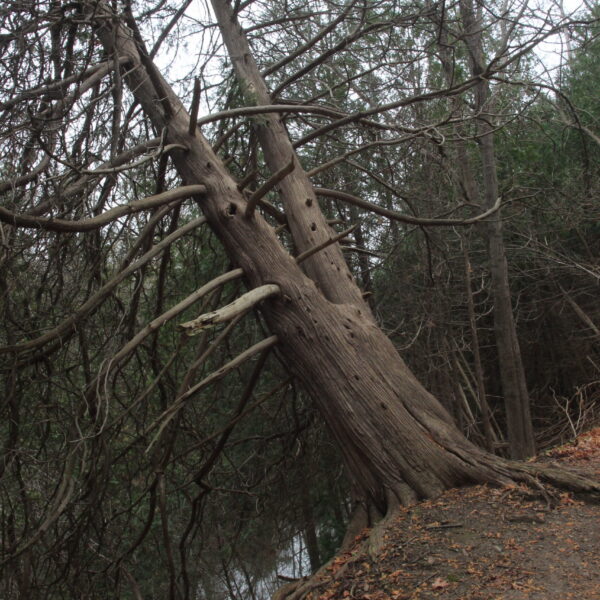
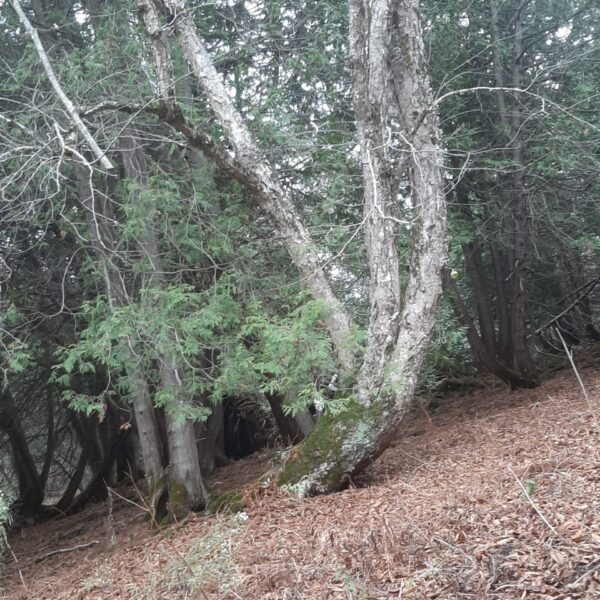
One day I was feeling a bit down so I took a walk along the Rouge Valley trail. That's where I first noticed this white cedar clinging to the edge of a very steep hill. I thought to myself: "If this tree isn't going to give up, then neither will I."
Surely it deserves to be honoured for its fierce tenacity.
Just as the first settlers to Pinhey’s Point (outside Ottawa) once did, my husband and I enjoy the shade of this native Black Walnut while watching the sail boats go by on the Ottawa River.
Situated beside the future location of our community's green burial site, this tree has become a symbol of reflection, renewal, and our shared commitment to protecting the natural world. While the green burial site has not yet been developed, the tree represents the values that inspired the project: respect for nature, thoughtful stewardship, and the understanding that our lives remain connected to the landscapes we cherish.As the site evolves in the years ahead, we look forward to helping protect this tree and promoting the naturalization of the surrounding area, creating a peaceful space where native species can thrive and future generations can experience the beauty and biodiversity of our local environment. As the communications team for Climate Action Now Network, we enjoy sharing stories that celebrate local environmental stewardship and inspire others to connect with nature. This tree reminds us that conservation begins long before a ribbon is cut or a project is complete. Sometimes, it begins simply by recognizing what is already worth protecting. As our municipality continues to grow, mature trees like this one become increasingly valuable—not only for the habitat, shade, and climate resilience they provide, but also for the stories they inspire and the sense of place they create. We hope its quiet beauty encourages others across Ontario to recognize and celebrate the trees that enrich their own communities.Thank you for considering our nomination. We appreciate the opportunity to celebrate a tree that represents both our community's natural heritage and our vision for the future.
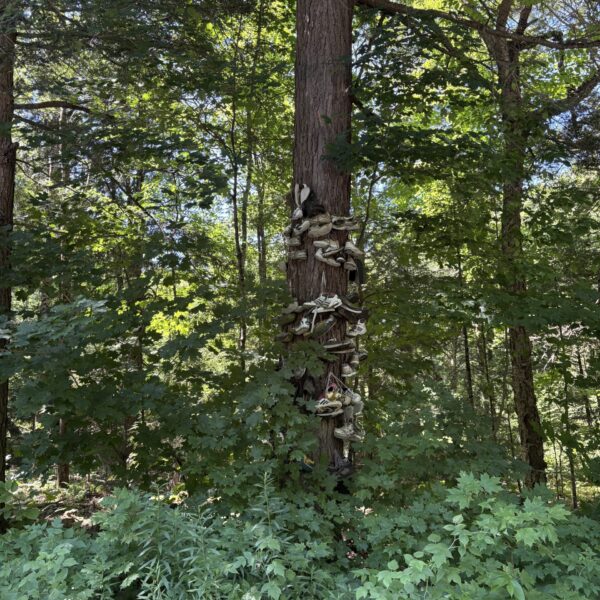
I have been coming to the cottage since I was born (13 years). To me the shoe tree is a symbol that means we are almost at the cottage. For me and my family the shoe tree is like a landmark on a map, always there and always will be.
At the centre of the Cambridge Sculpture Garden beside the Grand River in Cambridge, stands a living sculpture: the magnificent 145-year-old “Grand White Oak”. Despite devastating floods and increased urbanization over the years, this designated Heritage tree has thrived and thousands of people visit her and the garden every year.
This majestic Cucumber Magnolia is over 100 years old. The Cucumber Magnolia is Ontario’s only native magnolia and is endangered in the wild. It has unique green and yellow flowers in the spring and fragrant fruit that somewhat resembles a cucumber! They are typically located in Niagara Region and Norfolk County, but this cultivated magnolia has thrived for over a century in Brant County. Years ago, researchers from the University of Guelph would come to view the tree, and previous Mayor Ron Eddy would bring visitors, citing this over 100 year old specimen to be the furthest west mature Cucumber Magnolia in Canada! We now have 7 smaller Cucumber Magnolias on our property including a second cultivated 25+ year old magnolia and 6 of their offspring, with more incoming, flourishing and proving to be more resilient in our Southern Ontario weather. Save the Cucumber Magnolia!
I am nominating a relatively young River Birch on my cottage property fronting on the north shore of Lake Erie in Haldimand County. Like others, the pandemic inspired me to focus on nature – mostly birdwatching and gardening. Pre-pandemic, the emerald ash borer decimated the local stock of mature trees. We lost two ash trees not far from where I planted this River Birch as a one-year-old seedling in late Spring 2022. It was one of my “pandemic-induced gardening experiments.” This tree was one of five seedlings, ordered online, shipped frozen and dormant, and one of only two that has made it this far. Notwithstanding very harsh winter conditions this year, this one is absolutely thriving! I believe it is pageant-worthy for its resilience and beauty. And the Purple Martins nesting close by couldn’t agree more. They too have had a banner year.
Old Beauty
she’s stood sentinel
at the edge of the walk
more than 250 years
ancient in her wisdom
quietly holding her ground
silently shedding her tears
in awe of her beauty
beholden to her presence
like a trance
her colours shifting
with the elements
as her leaves
dance
dance
dance
fall as they will
their inevitable fate
leaving her bare
bewildered by her
a beauty so rare
come stand by her side
come rest in her shade
come give her gratitude
come give her grace
for all that she’s given
asking for none
such a gracious offering
may we be
forever in your debt
oh ancient one
The "Sitting Duck" Bur Oak is one of Simcoe County's most celebrated heritage trees. Estimated to be over 270 years old, it has stood at the intersection of King and Young Streets in Alliston since before European settlement, witnessing centuries of Indigenous history, community growth, and the founding of Canada itself. Officially recognized as a Heritage Tree in 2005, the oak has inspired countless newspaper articles, public celebrations, educational programs, and historical performances that tell the story of both the tree and the community that grew around it. It has also become a symbol of local stewardship after residents rallied to save it from road widening, ensuring its survival for future generations. Today, the Sitting Duck Bur Oak remains a beloved community landmark and a living reminder that our oldest trees are not only ecological treasures but also irreplaceable witnesses to history. Its enduring presence continues to connect people with the rich natural and cultural heritage of Alliston.
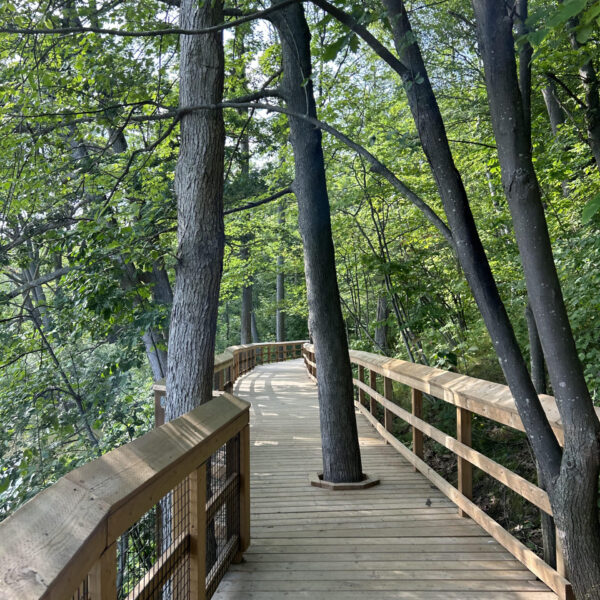
This maple is an example of interesting architecture accommodating trees. Rattray marsh is a beautiful stretch of marshland along the Oakville waterfront with many visitors during the summer months. I’ve seen many people stop to take a photo with this tree!
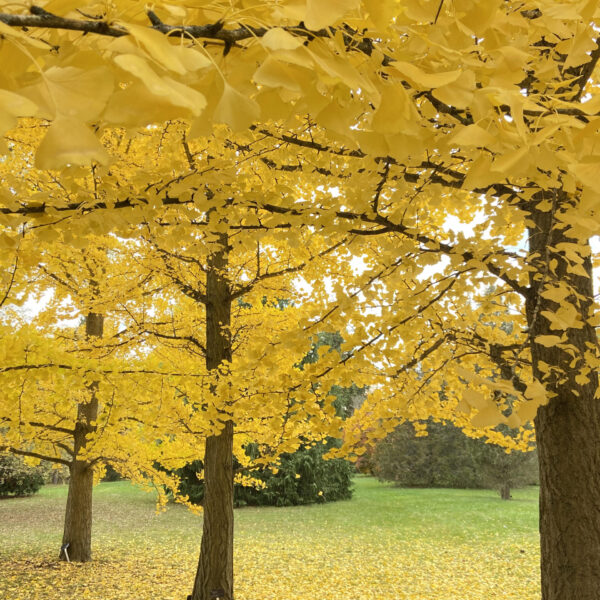
I would like to nominate the gingko trees in the university of Guelph arboretum. When I was in school, I would frequently visit them during the fall semester to take a break from my studies and enjoy their beautiful petal-like leaves and all of the joyful yellow!
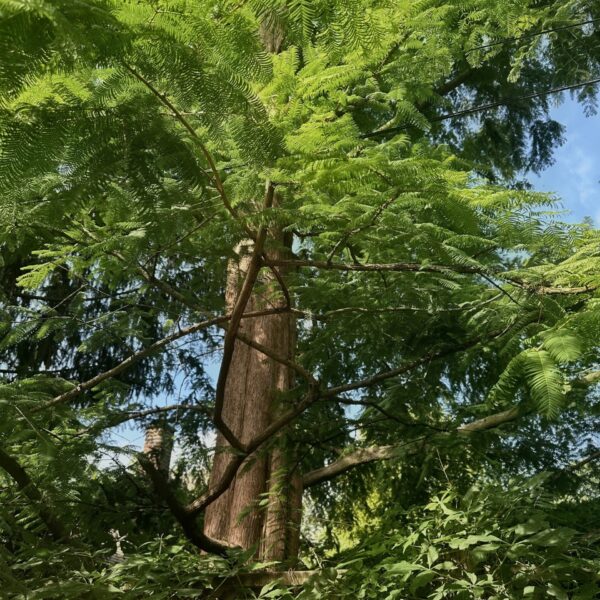
Sneaking under the Long Branch Tree Canopy. This Dawn Redwood has been hidden for some time until recently. The keen eyes of our Tree Canopy Team alerted me of this brave 'living fossil '. Although Long Branch has four designated heritage trees I would have gladly nominated her)/him as a fifth candidate. (rarity, endangered,location Toronto Treaty 1890 and health). The Dawn Redwood (Metasequoia glyptostroboides) is a fast-growing, ancient deciduous conifer known as a "living fossil" because it was thought to be extinct for millions of years until its rediscovery in China in the 1940s. Unlike most conifers, this unique tree sheds its soft, feathery needles every autumn after they turn a brilliant copper-orange or red-bronze. Discovery and Origin. Fossil Record: Widespread across the Northern Hemisphere during the Cretaceous period. Rediscovery: Found alive in 1944 in the wet mountain valleys of Lichuan county, Hubei, China. Cultural Name: Locals refer to the original shrine-protecting tree as Shuǐshān (水杉), meaning "water fir". Global Distribution: The Arnold Arboretum funded seed collection expeditions in the late 1940s, spreading the species to parks and gardens worldwide.
Thank You to our Judges and Sponsor
Judy Maddren, M.S.M. and Retired CBC Radio Journalist; Mike Schreiner, Leader of the Ontario Green Party and MPP for Guelph; Paul Zammit – Instructor, School of Environment and Horticulture; Terry Schwan, Professional Forester and Board of Directors, Forest History Ontario

Winner Celebration 2025
On October 4th, 2025 the winning White Oak was honoured in a special celebration in Niagara-on-the-Lake. It made for a very special morning that was complemented with live music, council representation, and words from the Epp family, who have championed and defended this tree over many years.
Check out the news release written by the town of Niagara-On-The-Lake regarding this event!
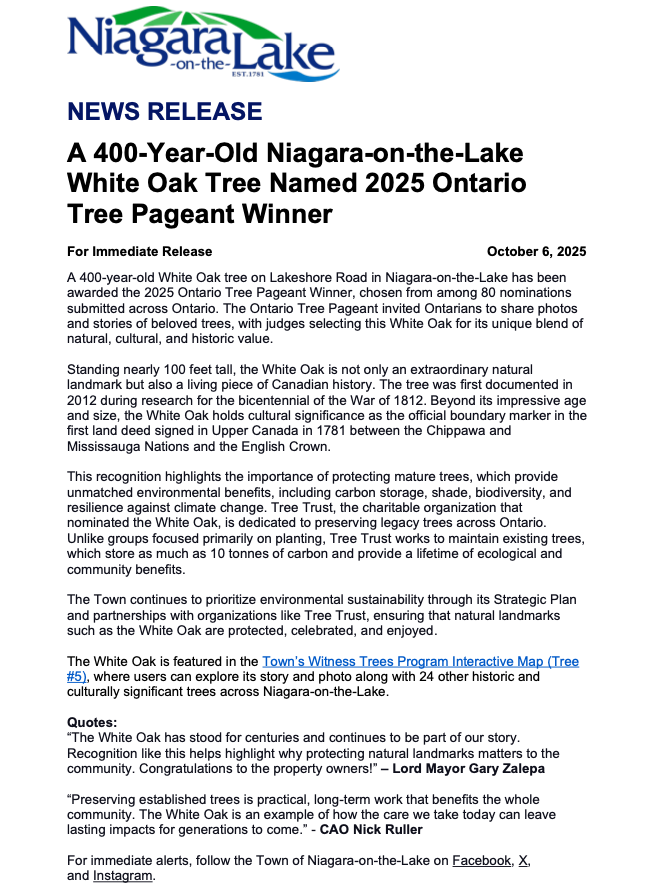
2025
Entries were submitted from across Ontario during the two-month competition, which invited people to submit a photo of a much-loved tree with a few words about it. Organizers are grateful to everyone who took the time to submit stories and pictures of their beloved trees.
Honourable Mention: White Oak
Among many great submissions, we’d like to include this impressive white oak as our honourable mention.

Third Place: Elm Tree
This majestic elm has survived a decade longer than Ministry of Transportation intended. In 2011, it was deemed “too close” to the highway. It and 4 other elms along the highway were marked to be cut down. Friends of this landmark tree in Huron County emailed and phone and publicly rallied on FB for the healthy tree to remain where it has flourished for 100+ years and M.T.O. decided it could stay. See FB page called “Save the elm trees – Huron County/Highway 4”. The grand old elm is already a winner in the eyes of many people from far and near.

Second Place: Black Walnut Tree
Standing sentinel over Mill Pond in Richmond Hill since the town’s founding in 1872, this majestic Black Walnut has witnessed the unfolding of generations. It has endured the force of epic storms and the relentless pull of gravity—so much so that human hands were eventually called upon to prop up and preserve its great central leader.Within its massive branches, life thrives. Countless species find shelter, sustenance, and sanctuary in its vast canopy.
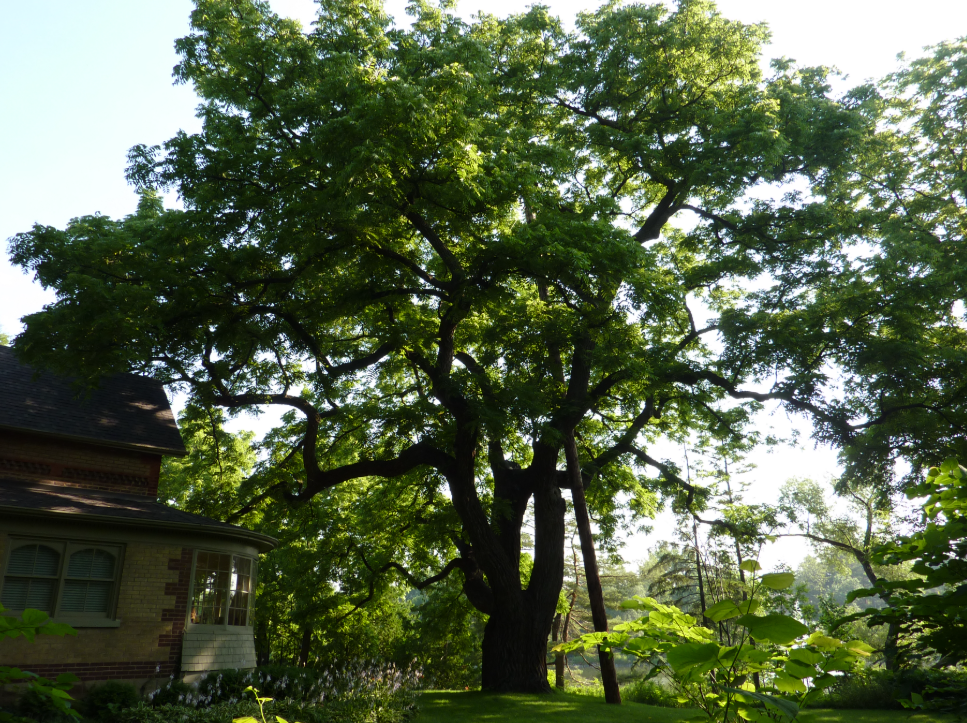
First Place!
White Oak Tree
The statistics indicated it to be 400 years old and 98 feet tall! The tree had been discovered in 2012 while investigating the anniversary of the war of 1812. ‘This white oak is the official boundary marker in the first land deed Upper Canada signed in 1781 between the Chippawa and Mississauga Native Chiefs and the English Crown. The deed was for a four mile wide strip of land, paralleling the Niagara river, on the west side, running from Lake Ontario to Lake Erie. The land was transferred to King George for 300 suites of clothing. In order to mark the boundary of the land, the four First Nations Chiefs chose a large white oak tree, forked 6 feet from the ground near Lake Ontario at a distance of 4 miles from the west bank of the Niagara river.

2025 Runway
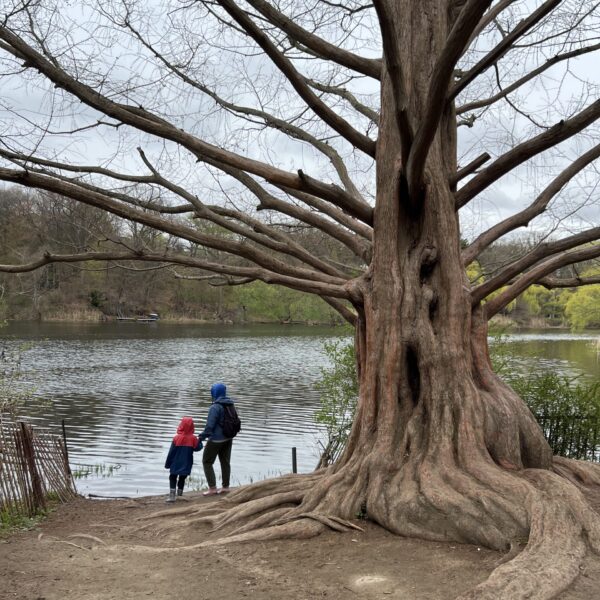
This is a wonderful tree that marks a little viewpoint at the bottom of high park. Kids love to play around the knobbly roots. My father loved this tree and we have family photos here prior to his passing. Now I have photos of my son climbing the tree and we continue the tradition of family photos. This tree represents heritage and community.
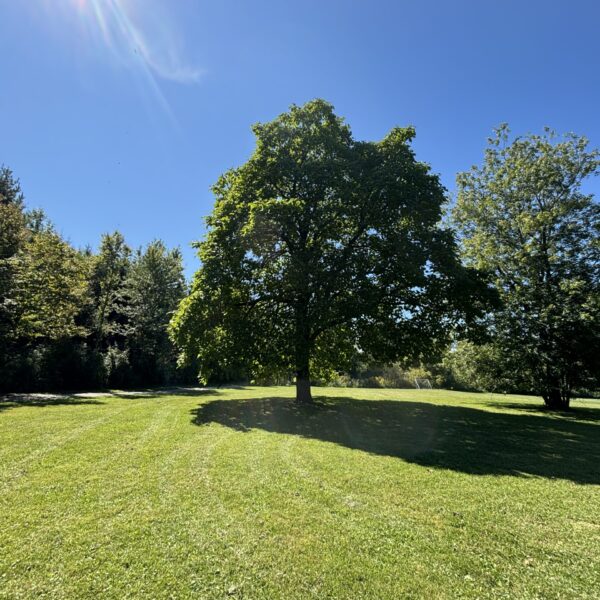
This Catalpa speciosa perfectly embodies the principle of “the right tree in the right place.” Given the space to thrive, it has grown into a stunning specimen—majestic, resilient, and quietly commanding attention. Though it may seem hidden in plain sight, this tree deserves to be celebrated for the beauty and presence it brings to its surroundings.
This Tri-colour beech is the crown jewel of the street with it's velvety soft, richly coloured leaves. Pedestrians are frequently stopped admiring this beauty, snapping pictures, touching the fuzzy leaves, and oohing at the graceful branches fluttering over their heads. But beauty is deeper than the skin, or in this case the leaves. I received this tree as a father's day gift from my lovely five children. They helped select it with my wife whose father had a similar tree in his Windsor yard. Now here in Toronto - this tree is a reminder of the love of my children, the memory of a well loved father (in-law), and the wonder of passer-byes who can bask in it's triple red canopy.
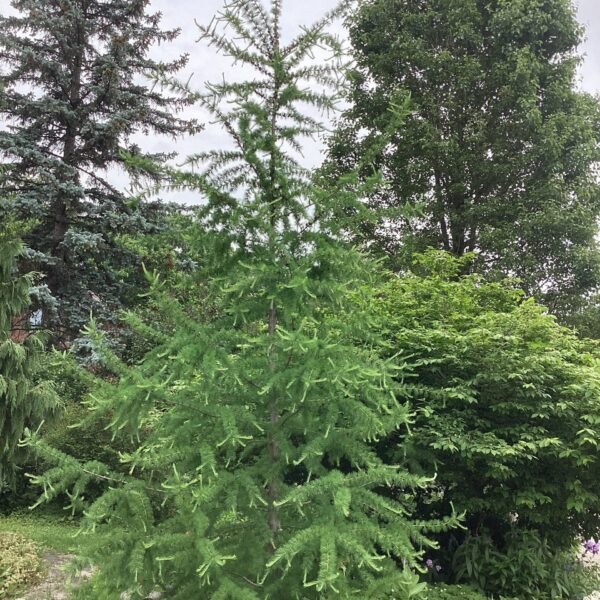
It is a native tree. The needles are soft and being a deciduous conifer the needles turn brilliant yellow in the fall and is still beautiful in the winter with snow on the branches. The most perfect little cones on the branches. 🥰
This Maple Tree is on Albert Street in Sundridge. Many people stop and take pictures of it in the fall when it is a glorious colour. Often, I have seen cars stop in September and take photos.
This huge Maple is something of a landmark at the yard behind ours.
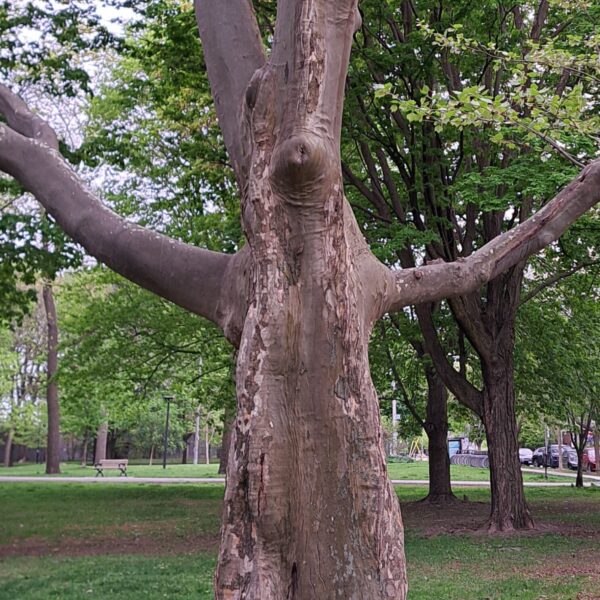
This London Plane stands with arms open wide, to welcome all who visit Monarch Park in Toronto. I first laid eyes on this beauty when I moved to the area 30 years ago. My young sons and I were fascinated by it. The tree looks as though a human spirit is straining to emerge from its trunk! A face ,body and arms can be clearly seen. Every time I enter Monarch Park I have a ritual of putting my hands on this tree, to feel its calming ,welcoming energy. I say ,"Thank you , I love you and I am grateful for you". This majestic tree deserves to be crowned 2025 Tree of the Year for all the awe it inspires!!
This white oak is the official boundary marker in the first land deed Upper Canada signed in 1781 between the Chippawa and Mississauga Native Chiefs and the English Crown." I almost fell over in sheer surprise. Not only did the tree dominate the landscape but it was masting in a drought year. Acorns were inches deep all over. I was moved by the pure dedication and care and passion and preservation that the homeowner has for this amazing and massive heritage tree."
My magnolia was planted 27 years ago by my mum and me when I was in high school. Every spring, it brings joy—not just to me, but to hummingbirds, goldfinches, and hungry squirrels. Though not native, it has become part of the local tree community, shading us in summer and dropping its leaves all at once in fall to mulch the garden. It stands beside our neighbor’s maple, sheltering our serviceberry, and I recently learned its flowers are edible with a ginger-like taste—no wonder the squirrels love them. I nominate this tree for the beauty it brings, the wildlife it supports, and the gardening bond it represents between my mum and me.

Standing watch over Mill Pond since Richmond Hill’s founding in 1872, this majestic Black Walnut has weathered storms and time. Its massive limbs shelter wildlife and quietly serve the community—cooling homes, filtering air, capturing carbon. When gravity threatened its great central leader, people stepped in, propping it up with care. This tree symbolizes a powerful partnership between nature and humanity. Thanks to dedicated urban forestry crews, it continues to thrive. In an age of climate awareness, it reminds us that stewardship goes both ways: after centuries of trees caring for us, we now care for them—one tree at a time.
It's beautiful in its extreme age - sparse, pockmarked and gnarly. It looked the same when my mother was a child, and we guess it's around 200 - 250 years old.
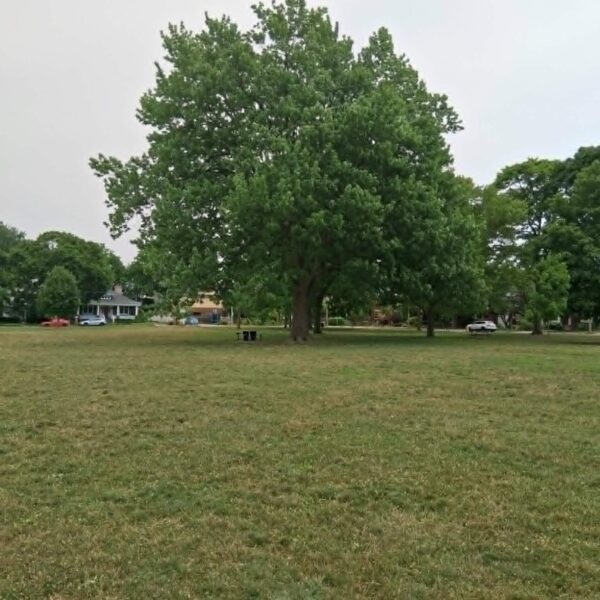
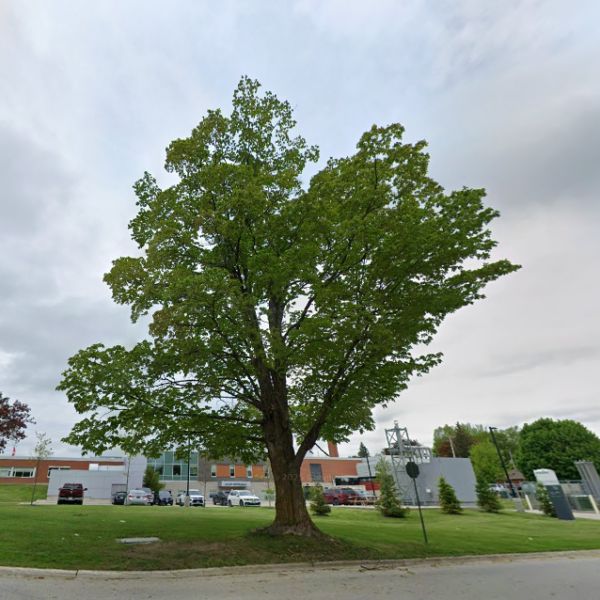
It’s a big beautiful Silver Maple.
This tree is the talk of the neighborhood, due to all the wild life that comes to it. It's a sugar pine tree, the lower branches were just removed this year 2025, due poor circulation. The tree is about 30 something years old and it is singing every day, just a different song from all the birds that come to rest in it. Most days you can see a rabbit, possums, cats, squirrels, and even people stand by it to get shade.
Glorious colours. Many neighbours stop by to enjoy it every year.
This tree amazes me every time I see it, whether it’s once a day or 14 times a day. People come to take their wedding pictures in front of it. I have the nicest view of any backyard I have ever seen courtesy of Mother Nature.
The majestic white pine historically covered the Great Lakes St Lawrence Forest region. Now, due to historically poor past management, wind storms, white pine blister rust and fire, we are losing many hectares every year. Forest practitioners are desperately attempting to managing this species using intensive forest management practices needed to be successful in its regeneration despite the forest industry’s struggling markets. White pine is an important wood product yes, but also provides critical habitat to so many wildlife species. I vote for the white pine tree due to its importance on the landscape and the challenge it represents in being successfully regenerated.
My Service Berry trees provide beauty, privacy, shade, and food for wildlife. They are native to our area and very low maintenance. They have a beautiful canopy and are a compact full size tree which is perfect in many locations including urban. The blossoms are very pretty and the berries are a favourite of birds but do not cause a wasp collecting mess like some trees, such as Crab Apple do.
This Tolman Sweet tree dates from pioneer times and is the last survivor of an orchard that once stood here. It has been home to countless birds, cats, and raccoons and still produces sweet yellow apples every second year.
Here stands Rodney the Tree, with over 230 5 star reviews on Google maps, Rodney is a symbol of the internet communities sense of fun and community. Rodney is just the average tree, but people have flown across countries to meet him. People have met friends by Rodney, and people have had memories next to Rodney. Because Rodney is more than a tree, it is a representation of the good that can come out of having a sense of fun, a bit of humor, and being open to enjoying even the smallest parts of our world.
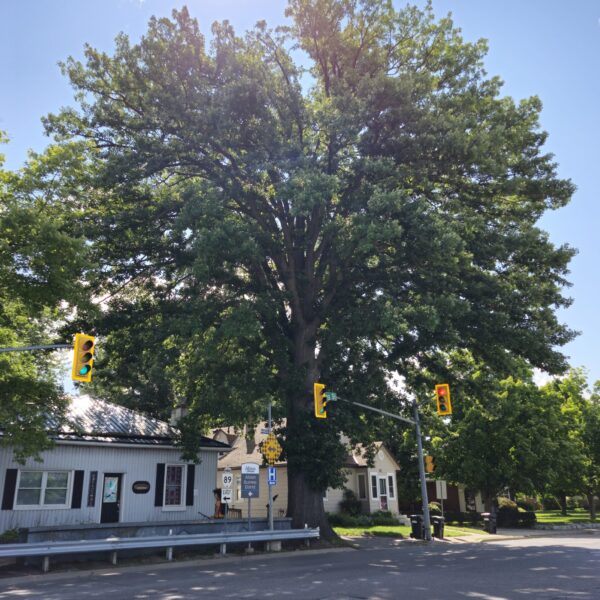
This 200 year old mighty white oak is a landmark of beauty. Situated behind an elemetary school, this white oak tree has provided shade as children learn and play below. The symbolism of an acorn growing into a mighty oak is fitting for an elemetary school as students demonstrate resilience and mature.
My tree is truly one of a kind -- a rare Northern Catalpa, the only one of its kind in our neighborhood. During the summer it bursts into bloom, with large showy flowers that look like popcorn. Come autumn, the tree transforms taking on a eerie, dramatic silhouette suited for Halloween. Neighbors and passersby often stop to admire it, many remarking on its unusual and captivating appearance.
This beautiful oak stands in the centre of my backyard where I enjoy its immense natural beauty every single day.
Every year this is the very last tree around to come to leaf. Every year I wonder if it's coming back. Every year it seems to come to life overnight and produces the most beautiful, fragrant, orchid-like blooms which lift my spirit in a way I can hardly describe. It is the ugly duckling come to life in my yard, from sparse and bare, while everything else is green and lush, to a breathtaking beauty, to which everything else pales in comparison.
Through over 20 years of advocacy, this heritage red oak was purchased by the City of Toronto in December 2021 and will become a tree parkette. I serve on the tree committee. In 2019, it became the first tree to receive a Heritage Toronto plaque. I’m now working on a provincial plaque with the support of Lieutenant-Governor Edith Dumont, who visited the tree on April 30, 2024. Mayor Chow’s office is also arranging a visit this year. In a letter dated May 5, 2025, the Lieutenant-Governor wrote:
"Standing beneath its vast branches, you can feel the history held in that space. The connection to land, memory and time is almost tangible. More than a magnificent tree, the Great Red Oak is a living testament to this city and province."
She captured it beautifully—perhaps only missing that it is also a living testament to Canada.
This American Beech was brought home from the woods near Ottawa, a sapling, the size of a broom handle, almost 50 years ago. Planted in a then new Ottawa East subdivision, it made it's way growing in blue Leda clay with just a bit of topsoil, and two driveways to live within bounds. Perhaps that is why the root buttresses developed so muscular, as the roots must have grown shallow and directional. It grew to a 40' height and a diameter of 24". Beech flowers and nuts make the soil beneath tannin acidic, supporting a yearly summer blossoming of white mushrooms, probably edible, but not yet confirmed. Healthy and strong, it stands, shading the driveways, and a feature specimen tree in a now half century neighbourhood. It grew to a 40' height and a diameter of 24". Beech flowers and nuts make the soil beneath tannin acidic, supporting a yearly summer blossoming of white mushrooms, probably edible, but not yet confirmed. Healthy and strong, it stands, shading the driveways, and a feature specimen tree in a now half century neighbourhood. The beech has been standing with us for over 50 years, it is our tree. It reminds us of all that is strong.
She is a Mom for all the mini forest.
The shade cast by our massive “Sitting Duck” oak prompted a road redesign to make it last another 200 years amidst climate change.
She is our majestic matronShe is loving arms of Mother Earth reaching out, givingShe is a lace curtain of heart-shaped leaves that allow the early morning sun to peep throughShe is home and playground to squirrels, raccoons, and birdsShe is kindness, sprinkling her white blossoms over our pool and walkway, sharing and welcomingShe asks for nothing in return but to behold her graceful presence and beautiful energy
This tree dominates our driveway and we recognize its grandeur everyday, privileged to be its caretaker . We just had it professionally trimmed to hopefully extend its life which is approximately 200 years old. This farm was established in 1842 and this Maple would likely have been here then. The property has thousands of trees but this Maple is the star!
Some describe it as magical, others as magnificent, but most who stand beneath the grand canopy of this 380-year-old White Oak are filled with awe. Its gravity-defying branches, some thicker than mature trees, create a shaded oasis stretching over 125 feet. Much like the grand cathedrals of Europe, this extraordinary tree beckons visitors to gaze upward, listen intently, and immerse themselves in the serenity and splendor of nature’s creation.
I deeply appreciate the silver maple on the trail behind my house. Its expansive canopy supports local wildlife such as birds and squirrels, and its vibrant seasonal colours bring a serene beauty to the area. This tree is a vital part of the ecosystem, offering both shade and a tranquil retreat from daily life.
This Maple is the quintessential Canadian tree. Huge, bright and beautiful it is a signature tree on the main street in our community. Beyond its personal beauty, it provides joy year round from its shade, the swing it suspend, the massive leaf pile for diving into or the Maple Syrup it relinquishes.
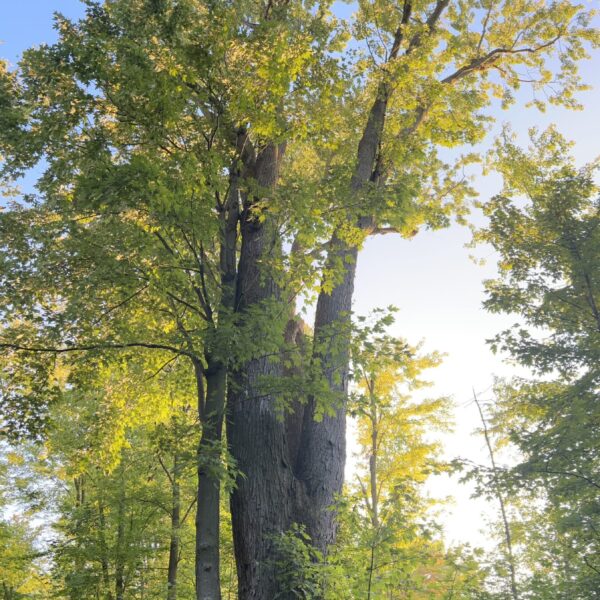
As a tree grows through the ages, this White Oak in the heart of the Victoria College quad has experienced it all and continues to share its stories with those who would pay attention.
This venerable old Oak was planted, along with its mate (across the laneway), by Dr. Frank Sibbald, in the 1870's. In fact there are huge pines and spruces all along the road, also planted by Dr. Sibbald, which give Hedge Road its majesty. We have been the custodians of the tree for ten years and ensure that it is cared for. We have an excellent arborist in Glenn Ramsbottom of Forest Glenn Tree Care. The only time I truly resent the tree is at leaf dropping time.
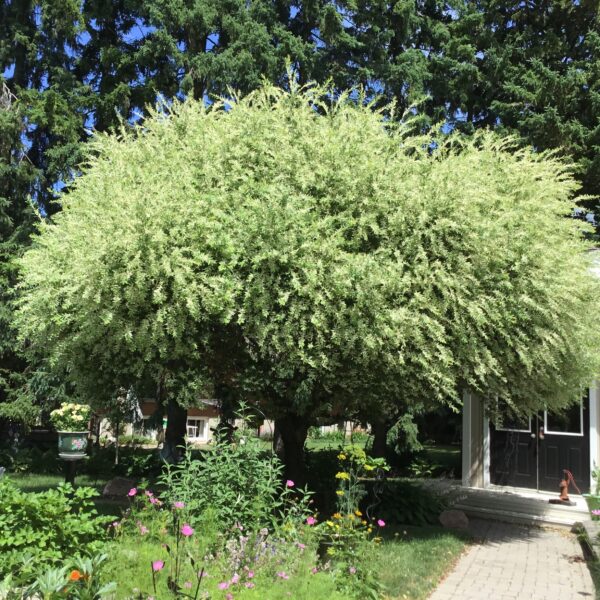
This beautiful Dappled Willow tree presents green leaves first, then as the season progresses, the leaves turn white, on into the season the leaves turn pink. She is the most gorgeous tree. And deserves to be honoured.
The first time I saw this tree, I was walking a nature trail with my (now) fiancé and when we rounded a bend in the trail we were met with this tree's majesty, standing out amongst all the others. It looked old and wise. This past spring, we had our engagement photos taken at the tree. Even the photographer wow'd as we approached.
This old tree makes me very happy, she might not look like much but the joy she gives me is Incredible. She is tattered and torn yet year after year she lives on.
This is a very rare fireball tree so if I'm every lost and cold in the woods I can pick a fireball and warm myself up.
It was Robert Louis Stevenson who said "It is not so much for its beauty that the forest makes a claim upon men's hearts, as for that subtle something, that quality of air that emanation from old trees, that so wonderfully changes and renews a weary spirit."I could not agree more. These three majestic trees elevate my mood every day as much as they elevate the landscapes of my retirement community with their beauty. To cut them down would be a tragedy beyond the silence of their leaves, a loss echoing through the seasons, where shadows once danced and roots once held the earth.I demand they outlive me to witness the seasons after I am gone, to keep breathing where I have breathed, and to stand tall in the sunlight that I will no longer see.
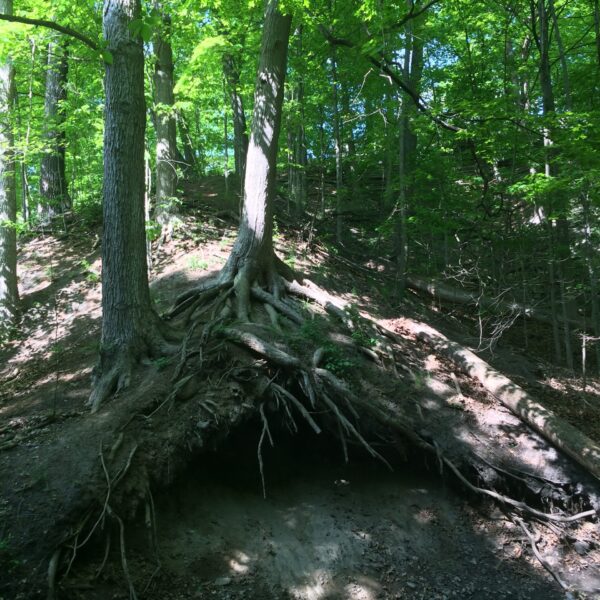
Despite all the twists and turns in my life, this tree has always been a reminder that there can be strong growth on the shakiest foundations. As kids, my parents would often take my siblings and I on walks through the ravine. It was here I fell in love with this tree. We were fascinated with the cavity underneath it and would pretend to be Bears, Foxes, or even Meerkats hiding beneath the roots. Then, as I got older, and family walks turned into solo runs - the only thing that remained steadfast was this tree. Even with all of the wholes life spawned beneath my feet, this tree was a reminder that it didn’t matter. Strength always prevails in the face of adversity, and the largest roots grow in the hardest conditions. This tree has meant so much in every stage of my life, and has been a symbol for my strongest beliefs. For that reason it definitely deserves to win the pageant.
Thought to send a photo of this Black Walnut, Juglans nigra, which has royally stood in Almonte for an unknown number of decades ! It regularly drops fruit every fall, sometimes by the bucket load.
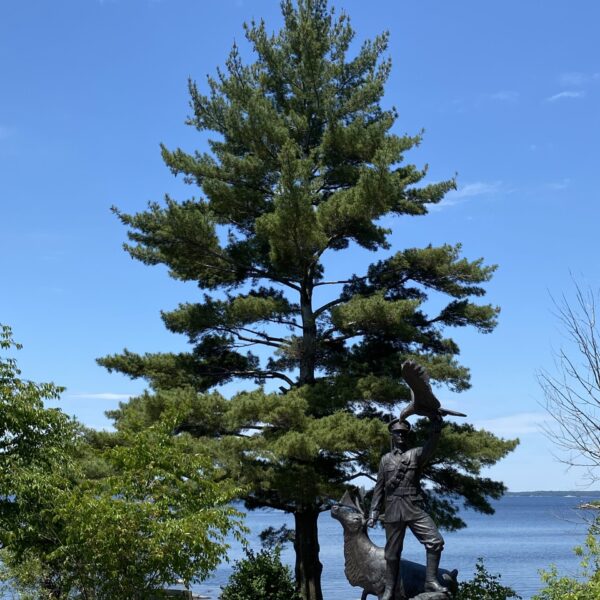
This is a beautiful Eastern white pine which stands overlooking Georgian Bay. The Eastern white pine is deeply rooted in Ontario's history, playing a big role in the province's development and ecology. It was crucial for shipbuilding in the 1800s, and later for construction and other industries. Georgian Bay is known for beautiful granite outcrops and white pines which have been molded by the westerly winds. This pine is still quite young, but is tall and straight, which would have been perfect for the shipbuilding of the past. We are fortunate to have this on protected lands and beside the Parry Sound waterfront trail so that everyone can enjoy it. The statue is of local indigenous man, Francis Pegahmagabow (1889-1952) who was a highly-effective sniper and scout in the First World War, and his military service and passionate advocacy for Indigenous rights continue to be an inspiration to his Anishnaabe community.
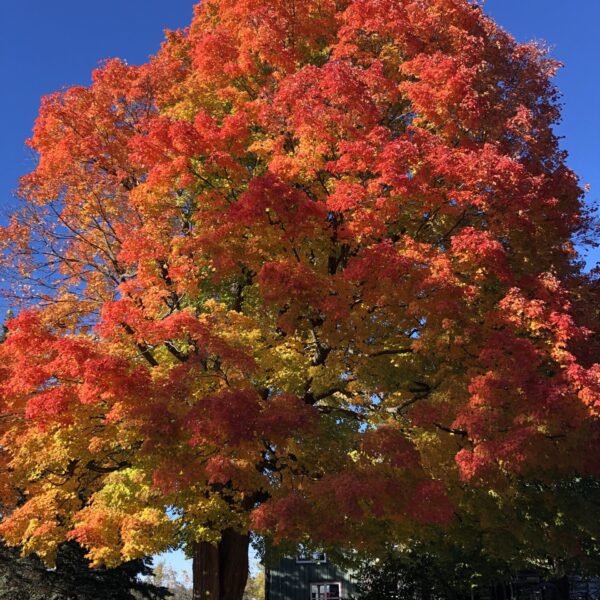
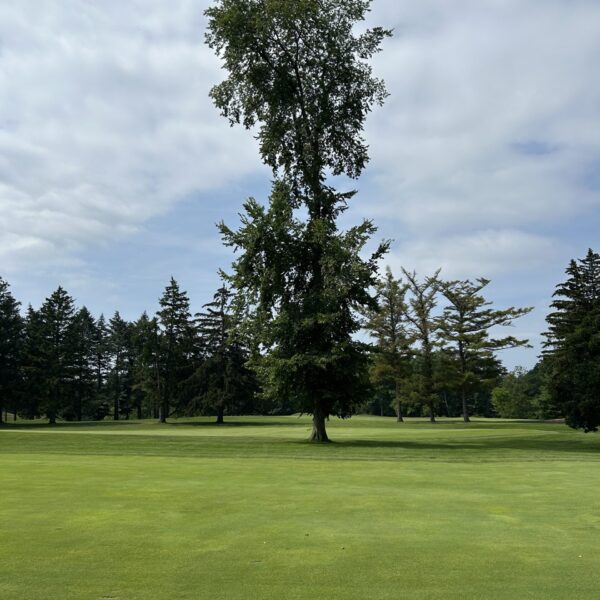
Back in 2017-2018 between holes 11&12 we began to clear a grove of three 50+ year old declining silver maples along with two unhealty spruce and a couple of red pine to open up air and light for the turf underneath. As the removals progressed we discovered deep inside the grove quite a tall, spindly, sparsley crowned looking elm that seemed to be doing rather well in that enviornment all things considered. We decided that since it was giving it's all to thrive in those clustered surroundings we owed our Charlie Brown elm a shot at making the big time. The thin crown of 8 years ago is now thick and shapely and what was once a bare trunk is now covered in lower branching that once thriving elm displayed back before the dutch elm eradicated the species in this area. Our Charlie Brown elm has survuved numerous wind storms these past few years and has become a beacon and focal point alongside the buckeye we planted after the removals. We feel that its determination and grit deserves our nomination for the Ontario Tree Pagent.
It’s a big and beautiful maple tree that has been growing in my front yard for years before I was born, and will stay for many years after I go. This tree has been through many different events, including being struck by lighting, from which there is a huge scar down the front. It’s survived many years of childhood climbing, rope swinging, and shenanigans. It’s had many different tree neighbours be cut down from disease and infestation, yet it remains standing. Plus, the maple tree is a symbol of Canada and that just adds to the it’s overall beauty! I hope you select my home tree for this year’s pageant!
This tree is stunning and has survived the municipality wanting to cut it down. It’s beautiful!
A beautiful tree, although technically not a tree, but a rose of Sharon. This wonderful tree is a hub of activity, bees, birds, squirrels alike love the flowers for eating and pollinating.
Between its size, scenic location, and evident age, this lovely tree is a highlight of any walk or picnic through Victoria park.
This tree gets to see the sunrise and sunset each day. Any colour of maple is a personal favorite, but the red or purple maple is also representative of a united Canada. For kids, they are ideal climbing trees, and we have several species of birds who love to build nests in this particular one. We love the shade the maple’s provide whether it’s to be able to play all summer long in the heat or to protect our house from overheating. They’re strong and sturdy. That’s why they’re the best!
This tree, a glorious Tulip Tree, native of the Carolinian Forest, can be found in Dorcheater Ontario as you enter the town from London at the top of the hill. My father, who passed last year at 89, used to take us every spring to see this tree in full bloom as kids and tell us how his father took him every spring as a child to see. I wish I had caught in full bloom so you could this tree's pure majestic beauty.
The Big Pine has been magnificently standing guard over the family cottage for more than 100 years. My aunt was born at the cottage in 1927 and claimed the white pine was as big in her youth as now.
This majestic elm has survived a decade longer than Ministry of Transportation intended. In 2011, it was deemed “too close” to the highway. It and 4 other elms along the highway were marked to be cut down. Friends of this landmark tree in Huron County emailed and phone and publicly rallied on FB for the healthy tree to remain where it has flourished for 100+ years and M.T.O. decided it could stay. See FB page called “Save the elm trees - Huron County/Highway 4”. The grand old elm is already a winner in the eyes of many people from far and near.
If anything, 2025 has given Canadians the opportunity to recognize that communities fare better when individuals reach out to support one another and build upon each other's strengths and resources. Our trees symbolize that these interdependencies occur as well in nature where two white pine seedlings, regenerated within an old abandoned farm yard, have grown stronger in the union of each other.
Gray smooth flawless bark, slow growing with strong roots that tower others, edible triangular nuts, paperlike leaves that hold into spring, elegant and few in a forest.
This year’s Provincial Tree of the Year for our chapter was a glorious 100+ year old copper beach tree located on the 16 acre gardens at the historic Westover Inn in St.Marys. The first building on the site dates back to 1867.
The renonowed English Doctor and scientist Diana Beresford-Kroeger tells us that a single mature tree - like our beech - provides 275 liters of oxygen per day which is 50 % of our daily needs.
Our local Upper Thames Conservation Authority reminds us that Shakespeare (close to our hearts here in Stratford) calls the Beech the Tree of Love, the queen of the woods and the holder of ancestral wisdom.
I was born in about 1876 although no one seems to remember my birth. I was a mere 'key' from my mother who was planted by a well-meaning widow, whose tears nourished us through the years. By the time I was a young sapling, the field I resided in, started to be filled with limestone structures where many other people came to shed their tears at my roots, telling me about their mothers, fathers, sisters, brothers, children and spouses who left this earth too early. Sometimes their words and tears made me tremble and sway and in my sadness for them I often wanted to break, but I somehow knew that I needed to be strong for these people who lived nearby. Through the years, the farm around our field disappeared and the nearby pathways became busy streets and sometimes I rustled my leaves to call attention to the busy passersby who seemed to ignore these grieving people.
My tree is special because my family and I planted it together on May 30th this year exactly one year after my sister Brook who was 7 passed away. We planted this red oak in our pasture where you can see it from all over the farm for family, friends and all who drive by to remember her. Brook was a girl who loved nature, the outdoors and climbing trees.
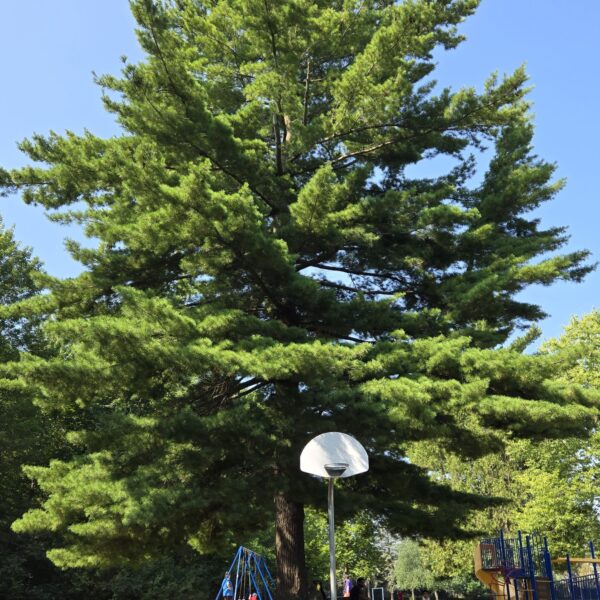
The Eastern White Pine is native to Ontario, and the official provincial tree. This particular stately specimen resides in a children’s playground, perfectly poised to provide midday shade to young families and support local wildlife. As every parent knows, a well shaded children's park, where the slides don't burn on the way down, is a valuable neighborhood asset!
This hackberry tree has developed a beautifully rounded canopy atop an artfully curved trunk. It shades children zooming around in toy cars while serving as a native host plant for several butterfly species. In the fall, it comes alive with chirping birds flocking to the berries.
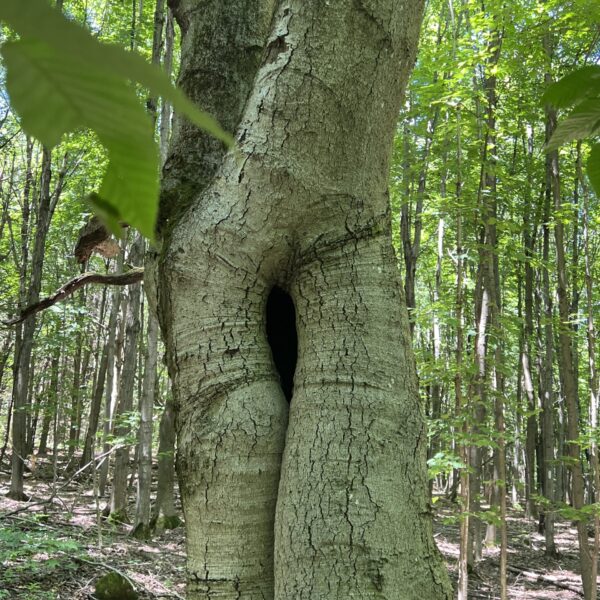
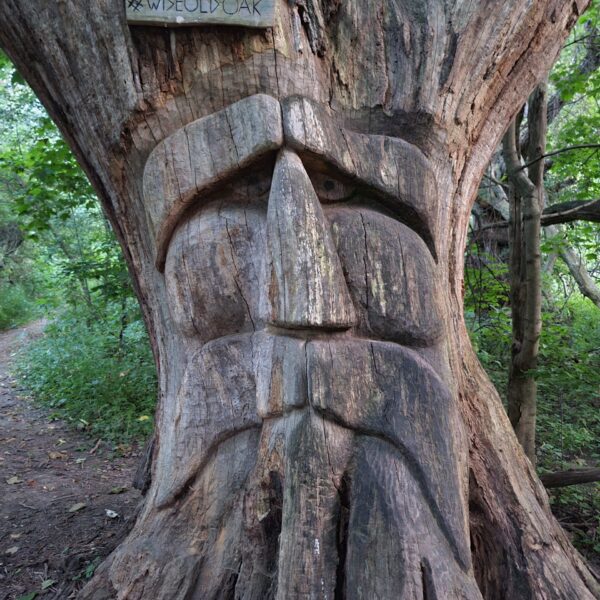
I like the wise old oak because it feels alive. It’s like it’s watching over the world in silent thought. It makes the forest feel magical. The face reminds me that nature has stories to tell—if we just take time to listen. The tree reminds me to slow down and notice the beauty around me. Every time I walk past it, I imagine it watching over the forest like a guardian. The wise old oak isn’t just a tree—it’s a friend with a wise, wooden smile.
I would like to nominate this marvelous Catalpa just north of Brighton. A few early members of the Brighton Horticultural Society began caring for and planting trees in the Spring Valley parkette in 1935. I remember when this tree was planted by the Society in 1953. When Northumberland County took back the parkette in the 1990s this catalpa tree was damaged and the main trunk was cut back to 4 feet. Suckers have grown back with great determination and they have become the tremendous tree that it is today.
My tree is an apple tree that was given to my family the day of my sisters funeral. This tree is special because I can see it every day, and it reminds me of climbing trees and picking apples with her.
Majestically towering over the eastern border of Long Branch, this 130 year old Heritage Tree, a Northern Catalpa, is a real showstopper. When in bloom, this Grand Lady fills the neighbourhood with a dazzling white plumage and a seductive floral scent which attracts birds, bees and curious wildlife. Officially recognized as the "Appleby Catalpa "by Forest Ontario, the tree is firmly rooted on the original farm land of The Appleby's, a prominent pioneer family of Etobicoke. Indigenously known as the 'bean,' or ;cigar tree, the clear grained catalpa wood is prized amongst luthiers to hand craft exquisite sounding guitars and similar musical instruments.
Sentinel of Seasons – The Oak That Watches Over Warkworth; On the quiet stretch of Greenly Road, there stands a being older than memory and grander than time. This is no mere tree—it is the Mighty Oak, the unwavering sentinel of Warkworth; This colossal oak has rooted itself deep into the soil and soul of Northumberland County. Its limbs stretch like the arms of a giant, bearing the weight of storms and the glory of sunrises, its trunk weathered and furrowed with the script of decades gone by; This tree is a witness; It has stood as generations walked to school beneath its branches. It has overheard the laughter of picnics, the vows of lovers, the silence of solitary wanderers. Farmers have tipped their hats to it in passing; children have climbed its boughs and birds return to it each spring; In winter, bare and regal, it reveals the architecture of endurance. In spring, it erupts with life, an explosion of green that feels like a resurrection. By autumn, it becomes a cathedral of fire, its leaves an anthem of gold and ember. In every season, the oak reminds us of cycles deeper than our calendars and constancy stronger than our fleeting concerns; In an age increasingly defined by speed and impermanence, the Mighty Oak offers a different gospel: one of rootedness, resilience, and quiet majesty.
This silver maple has stood here, on Elmgrove Farm, for over seventy years. Its broad canopy provides a place to gather or rest and reflect in communion with Mother Earth.
I love the Russian Olive tree located in Arthur Dyson Parkette. Families in the neighbourhood have photos taken, sitting on its horizontal tree trunk! It is beautiful.
The White Pine of which I write is a very old tree. Scientists guess it is "way older than Canada" (170-204 years). This tree is a living testament to the White Pine trees that were once numerous in Ontario. Being gnarly, it has survived generations of settlement on the shoreline of Lake Nipissing. This gnarled but thriving tree is a historic monument in the Municipality of Callander, which has grown up around the tree.
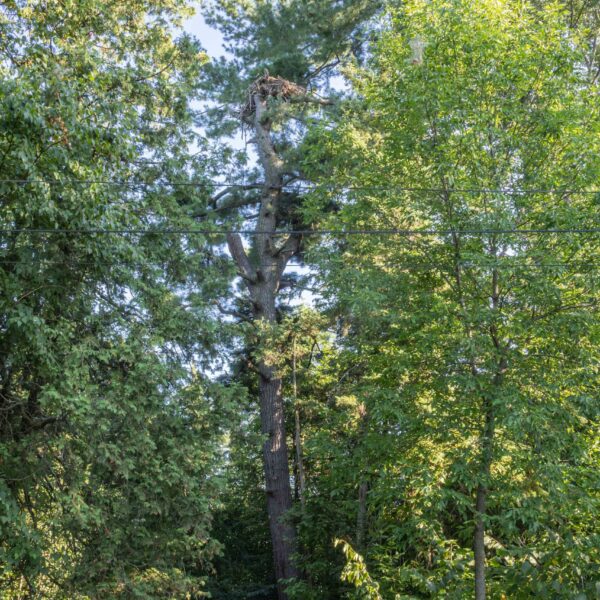
A pair of Bald Eagles chose to nest in this tree some years ago; a celebrated rarity in the area. Interestingly, these eagles do not migrate and spend time adding sticks to their nest year-round, protecting "their tree" from any curious interlopers.
The exposed location of the tree has made it a destination for bird watchers. It is a tree admired by people, local and from afar who proudly take children to this tree, that they might see the Bald Eagles and eaglets that call the tree home.
Sadly, this great White Pine tree which is older than the Municipality, is slated to be cut down in the name of progress. If the Municipal Council has its way the tree will be removed to make way for condos.
Our massive one-sided beech tree at has impressively adapted, reaching for the sun and defying gravity. We love it as a feature in our mixed-zone woodlot hike! the beech tree appears to be free of disease and is still going strong amidst all the shade and lopsided-ness. It also marks the environmentally protected wetland area of the property. It’s a very quirky feature of our walk that everyone loves to point out. The huge arms reaching toward the field are really incredible and I always imagine what it would be like to be a little chipmunk getting to explore it all the way to the top.
This magnificent Black Oak is one of the few remnants of forests cleared for farming in southwestern Ontario. One naturalist estimated it might be as old as 500 years.
Not may be the first tree that will catch your eye but behold the sacred Cedar tree, the tree of life, majestically standing in the land of Katarokwi (Cataraqui, also known as Kingston). From roots to leaves, this venerable tree weaves its own path of aid and comfort through life's varied circumstances. It is used for purification, healing and protection. Rich in Vitamin C, its gifts bolster wellness in times of sickness. Branch that is rot-resilient is used to make houses, totem poles and canoes, a testaments to its enduring strength. The bark can also be made as a diaper, clothing, bedding, baskets, sanitary napkins and so much more, showcasing resourcefulness through tradition. This tree signifies so much resiliency that can mirror a lot of people, especially Indigenous people, withstanding every seasons in life whether it be the harshest winter or the hottest summer, just like life. Its purpose served and ensured the life of Indigenous for millions of years and continues to do so, symbolizing strength and vitality, forever will remain. The Cedar, the tree of life, will always remain a timeless emblem of resilience and spirit.
My father loved trees and building furniture, although he was an apple grower. Tapping trees for maple syrup was something we often did as a family. But my favourite tree now, in my retirement, is this amazing white birch that is on my front lawn. I bought the place 3 years ago mainly because of it. It is one tree widely branched and makes the perfect place to take pictures. The gatherings from several important events have already been photographed under it and in it. Very old for a birch tree I think. The hole near the base of it that you see in the picture goes half way through the main trunk! I don't know how long it will be with us, despite the extra care I give it, but every day we have is precious. I love it.
My tree deserves to win because it is a rare White Oak Swamp tree that is about 250 years old. Its circumference is 18 feet. The St. Clair Conservation Area comes every year to collect fallen acorns that are given to nurseries all across Ontario to grow new trees and continue its legacy.
My tree deserves to win because in 1911, the people who owned the property before my grandparents did, planted three oak trees together to grow into one. They named them Faith, Hope, and Charity. It serves as a reminder of the past, and that love endures.
My tree deserves to win because this willow tree is special to me. It grew from a cutting that my Nona gave me in a big pot from her big willow tree at her house in London. It survived for 2 years in that big pot before my family found a house of our own and planted it outside our back door, where we can watch it grow.
This maple tree specifically, reminds me of the heart of Canada and the people who embraced and gave me a 2nd home. It holds a special place in my heart as an immigrant, I lost and found myself in this country. Forever grateful for maple and its people. Ephemeral yet constant - a cornerstone of home. Our apple tree.
From burgeoning blossoms that tumble and whisper warm winds of spring. A swift fall onto a bed of burnt orange leaves, juices tart and crisp. Bare branches, dipping and swaying in the frigidity of long winter nights. Ephemeral yet constant- a cornerstone of our home. Our apple tree.
The Sentinel Oak – For over two centuries, this majestic Bur Oak has commanded the shaded banks of Hoards Creek beside the Keating–Hoards Marsh. It has borne silent witness to Indigenous life, the arrival of settlers, and generations of farming - a living reminder to honour the history, land and wild beauty that sustain us.
‘Mom’s Tree’ Once a scrappy sapling tangled in the beams of an old shed, this Box Elder was saved and grew into a proud farmyard giant. As a boy, I’d see my mother in her favorite shady spot beneath its branches, smiling as she watched Dad work in the garage. Now that Mom is in long-term care, we think of her every time we see it - a living reminder that with love and care, even the smallest beginnings can grow into something strong and beautiful.
In 1912 the Guelph Country Club Golf Course was established. It is said to be the same year thisbeautiful tree was planted. Located at the centre of the patio on the golf course, it is beloved by staff and patrons alike. Its branches offer shade to the patio. It provides cover for birds and small mammals. The Pignut Hickory produces acrid tasting nuts that were said to be fed to pigs, hence the name. DBH 3'6" ft or 106.68 cm from 11ft circumference. Age est: 113 years
This tree is more than a landmark to those driving into Elora. It is a living part of our evoling family story. For over two decades, our front-yard maple has stood watch as our home at 20 and 22 York Street evolved from a temporary stop into a multigenerational, dynamic hub we now call The Blue Door Community. It has shaded meals, mornings coffee's, listened in and supported tough conversations, and cradled the laughter of three plus generations. Its branches have been monkey bars, bird homes and places for quiet contimpation. Its roots and changing branches have steadied us through phases of love, loss, growth, and wild reinvention. Now, as it quietly ages alongside us, we want to honour its role in shaping not just the land but the people who have been lucky enough to live beneath it. This tree has helped make our house a home and our three front doors a community. This is the idea tree to celebrate the power and meaning of our urban forest.
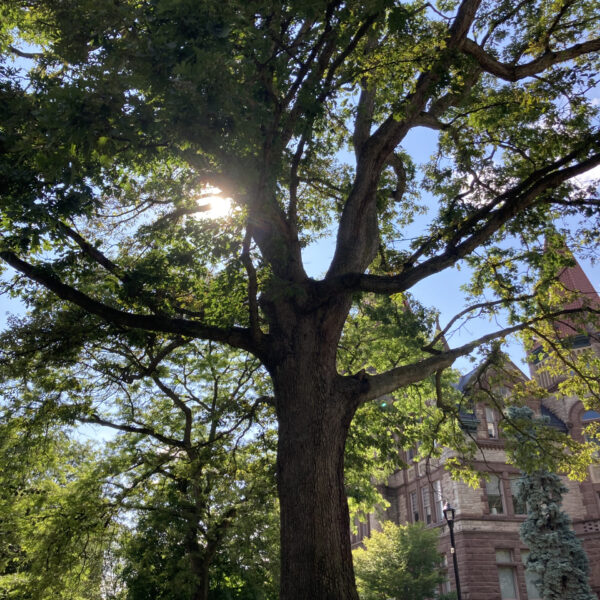
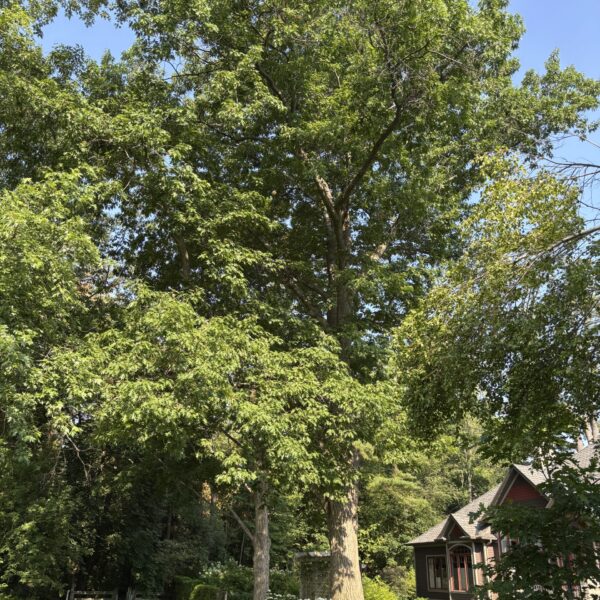
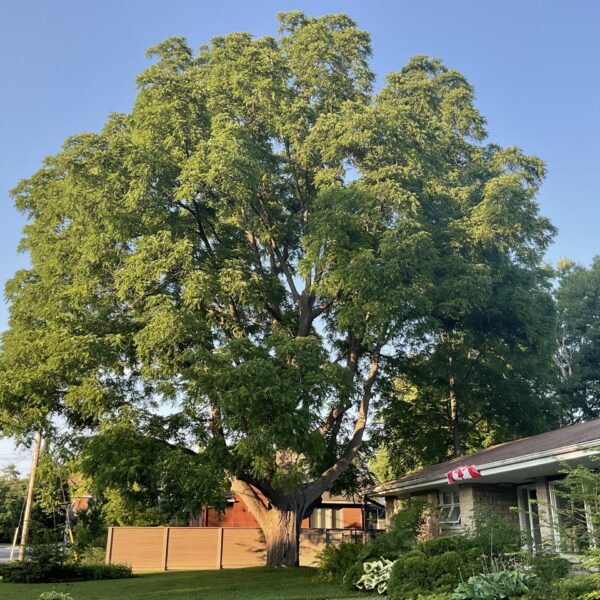
Located in Mt Forest, 101 cm DBH. This tree is so loud and proud ! Every time I drive by it, it makes me smile . This giant deserves some TLC as it has clearly stood guard at the hospital , has witnessed many joys and grief ,and has great promise to live many more years, with the investment of care. I nominated this tree last year and will continue to nominate it until it wins !
The grandest cedar in a mystic grove, I have named “Grandfather”. He stands majestically tall and proud; his girth wide and limbs strong, standing amongst members of his cedar clan.
Inaugural Year: 2024
Entries were submitted from across Ontario during the two-month competition, which invited people to submit a photo of a much-loved tree with a few words about it. Organizers are grateful to everyone who took the time to submit stories and pictures of their beloved trees.

Honourable mention:
An ancient Apple tree, dubbed a ‘spirit tree’ that is growing in Georgina Township. This tree has proffered food for 7 generations of
the family living at the homestead.

Third place:
A majestic White Elm gracing Perth’s Stewart Park. It is likely older than the park, which itself was donated to the town in 1947. Miraculously, the tree has avoided the Dutch elm disease, which killed so many Elm trees. Today, it serves as a stunning backdrop to many summer festivals and concerts.

Second place:
A much loved, 380-year-old White Oak with a canopy spanning 125 feet. This healthy giant in Kingston provides a treasured, shaded oasis for its homeowners.
First Place!

Known as the Great White Oak, this landmark tree stands majestically in front of the Royal Ontario Museum, where it was already established when Canada’s pre-eminent museum opened in 1914. Amazingly, construction of the Yonge-University subway tunnels 50 years later managed to dodge its roots. Throughout ROM’s many expansions and renovations since opening in 1914, Museum staff have ensured the protection of the White Oak and its roots. Most recently, this has included the construction of the Michael-Lee-Chin Crystal, the restoration of the Queen’s Park entrance, and the current transformative OpenROM project.
Through it all, the tree – now in the later stages of its expected lifespan – remains healthy and a landmark along the Queen’s Park facade of the Museum.
“ROM’s heritage white oak is a beacon to the region’s past when oak-pine forests dominated the landscape. It, and the other giant oak trees that dot Toronto’s parks and streets, are the offspring of those forest trees. They are the sentinels of today’s urban forest, still producing acorns that will grow into trees gracing the canopy of our city in the future. Thank you to all who cherish this splendid tree and have honoured it in this way”
– Deborah Metsger, ROM’s Assistant Curator of Botany and co-author of
A Field Guide to Trees of Ontario.
A short celebration is being planned at the tree to honour it, with details to follow.
The 2025 Ontario Tree Pageant is proudly sponsored by:

Ecclestone Financial Group Inc.
www.efginc.ca